
Connector| Internet on the Ocean
Project Details
The Challenge | Internet on the Ocean
Connectors
Transceiver on the shores transmit signal to a range about 100km and repeaters on ships take signal and expand the range again and again
We are Connector team and our goal is to make the lives of people who work and life on the ocean easier by providing economical & stable internet accessibility anywhere they're at.
That isn't an easy challenge, we worked so hard to nail this idea & to make it feasible as much as possible, so after lots of brainstorming, it will not cost a lot.
For a start, we'd like to discuss one of the most interesting oceans, the Atlantic Ocean, because it has the majority of ships worldwide, we will take it as example.
We will divide our solution into steps.
First step we will contract with Internet Service Providers to build transceiver towers along the coasts overlooking the Atlantic Ocean like ISPs in USA and Europe and other countries.
According to a power about 200 watts applied to these towers, it is estimated to transmit internet signals by a range of about 100 km.
Second step we need to reconstruct our signal and save it from attenuation, we found out that we urgently need repeaters to receive low signals and amplify it then transmit it again. So, we will provide all ships in the ocean with these repeaters as they will also provide wired internet to the whole ship. here every ship will act as a traditional home Wi-Fi repeater for itself & act as signal repeater for other ships around it.
Third step We will add compatible batteries to our system in order to operate automatically if the main power supply on the ship is lost.
So, operators have to buy our repeater that is convenient to their ship's specifications, in which definitely it's cost will be incomparable with the conventional satellite transceiver.
Until that point everything looks perfect, but actually when we start taking the real steps, we are going to face some real-life challenges:
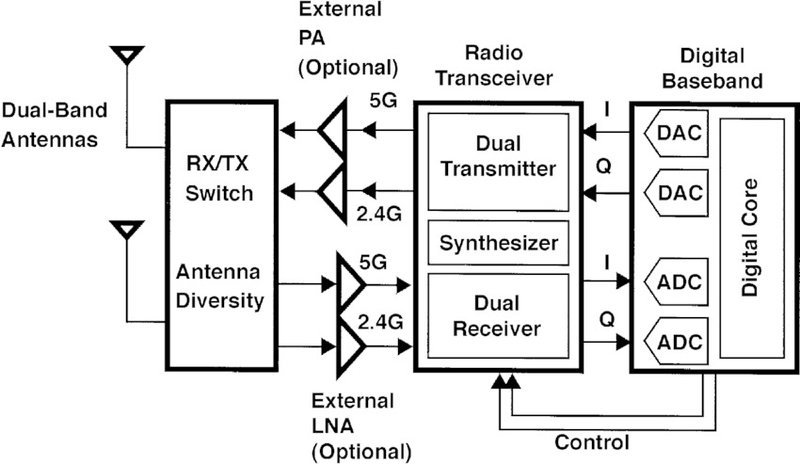
the first challenge was that there are some countries use 5 Giga hertz for wi-fi connection and currently the most common is 2.4 GHz, but we overcame it by designing dual band antennas in transceivers on the coasts & repeaters on ships.
the second challenge was that We have to deal with all the countries that have ocean coasts. we solved it by arranging a universal communication protocol for internet service providers that will sign with us.
Implementation:
Our solution will be fully implemented after 2 stages:
First stage: We will target commercial & cruise ships because these ships have a known path and is considered the basic costumer segment and must be satisfied.
Second stage: after implementing our repeaters on the marine vessels, we will target the small ships & boats, providing them with our software that gives a suitable route near the vessels in order to keep them connected all the time.
in conclusion:
we used Commercial Off The Shelf (COTS) products which is recommended by NASA to conquer our challenge in which a huge cost is saved for us & the users, in addition to that by this communication technology we are about to conduct a new, high quality & cheap internet connection on-board for all kind of ships.
It’s hard to estimate a specific cost for the repeaters because it depends on the antenna design which is done by the specialized antenna manufacturers.
Finally, if you have a ship and want internet anywhere at the ocean for an affordable price, you should contact with us immediately.
Future plans:
could we use similar technology to help astronauts connect to internet in space???!!!
That is what we will think about.