
Aquilla Raptors| Trash Cleanup
Project Details
The Challenge | Trash Cleanup
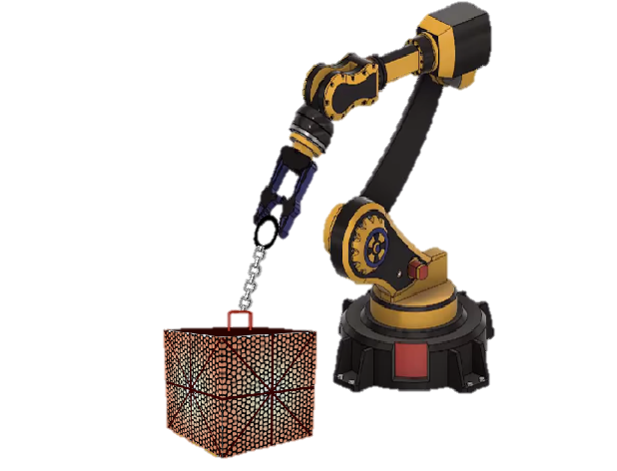
The cubic lift
Our main goal is to snatch plastic wastes from waters to save marine life and collect secondary trash. Our solution is highly effective and does not cause any damage or leave any pollutant in the water.
- IDEA VALIDATION
Oceanic waste collections are collections of marine debris that, because of ocean currents, combine. The
and California, in the northern Pacific region.
Such "patches" are not garbage islands as many people believe, but dense regions of pollution from the
surface of the water to the bottom of the lake, often not even appear in the ocean.
These garbages patches have devastating effects on marine life and pose significant threats to ocean ecosystems and humanity in extension.
So, we tried to help marine’s by cleaning its home from our sabotage and conserving our world’s waters.
- PROBLEM DEFINITION
Nowadays, plastics become one of the most ubiquitous industrial materials used to manufacture many
applications around us such as the televisions we watch, the clothes we wear, the bottles we drink from, and the toys we play with. Simply, plastics are synthetic or semi-synthetic materials made from natural products: coal, natural gas, cellulose, salt, and crude oil.
In addition, plastics are different in their sizes, ranging from few microns-called microplastics- to such large ones
marine environment has reached over 350 million tons.
garbage that affects marine life.
- VALUE PROPOSITION
Our main goal is to snatch plastic wastes from waters to save marine life and collect secondary trash. Our solution is highly effective and does not cause any damage or leave any pollutant in the water. And our solution is not just depending on extracting plastic wastes but we will exploit it and recycle it in making building blocks or use it in manufacturing fertilizers.
- METODOLOGY
The micro algae or the activated carbon will secrete a sticky substance that is going to stick with any
microplastic particle where the lower part will
After some time, the microplastics will
Finally, the robotic arm will lift the cube from the water with the wastes collected.
- ANALYSIS
A spectroscope is a device that measures the spectrum of light which analyzed after passing through samples by using the software Spectragryph, typically used in spectroscopic analysis “spectroscopy” to identify materials, to measure the concentration of microplastics in a
Activated carbon:
Activated carbon can be effective in reducing hundreds of substances, including contaminants and other chemicals. Activated carbon works via a process called adsorption, whereby pollutant molecules in the fluid to
The base of the cube:
The concept of the base is that when something
FUTURE PLANS
The activated carbon will
The recommended dimension for the cube is 1003 m3, with 222 bands in the base of it divided into 311 lines with a thickness of 22.2 cm.
Recycling the remains of microplastics from the
- RECOMMENDATIONS
Changing the constructing material of the cube from copper to steal because it is firmer, heavier and withstand greater pressure, but it