
Caring for the ocean| Trash Cleanup
Team Updates
OCEAN IS WORLDWIDE-FINDING OUT THE LOCATION
In order to deal with ocean garbage,we have to find out the location.
So, we find out NASA's web"https://svs.gsfc.nasa.gov/4174" that shows an Interesting phenomenon.
The phenomenon is that the buoys flow for many years will get into specific area.
But ,the specific area is not a precise value or location.
In order to transfer the specific area into precise value or location.We found at NASA's data "Behrenfeld_08-74_report-rev121908" Sheet"SeaBASS" which shows the specific ID to buoys and record its Longitude and Latitude.
Combining the uppers NASA's projects we can find out the precise value from the specific area.
It's what our team to find out the ocean garbage's location.
Image processing con.
-the way tear the pictures up for training module
The example blew shows a picture which is width 290pixs X Height 174pixs.
If we would like to tear into 50pixs X 50pixs square image,it's definitely have the wast of the picture in the corner.
Forcing to this problem I found that I can split the picture from top-left,top-right,bottom-left andbottom-right four direction to extend origin pictures.
Pictures are the static data,so,the way tear the 1picture into 4~1pieces(According to the division situation)
The pieces can be seen as different valid data for training module.
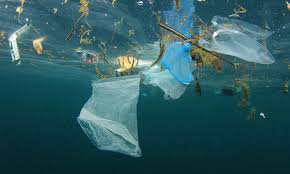
Image processing - Data always not Big enough!!
In previous section ,we talk about what images we do got.
BUT,it only has 91 pictures. It's obviously inadequate.
So,our team have a way to deal with this kind of problem by using image processing.
The way we process is using cutting into pieces to extend origin pictures.
Next section we will explain what do we cut the origin pictures into pieces.
Data search - Finding the data about Ocean Garbage
When we talk about the big issue about the ocean,it comes the garbage in ocean.
So,we'd like to develop the edge AI application to detect garbage in ocean.
It can't be separated from big data when we talk about AI.
How do we detectgarbage in ocean by using big data?
Our team would like to use NeuroPilot which made by MediaTek Foundation.
It use tensorflow to build machine learning in NeuroPilot package.
Building machine learning will need big data to support it.
So,Our team wants to collect the Big data about the pictures which have the ocean and garbage in the same time.
We already found 91 original pictures in Google Search which match our concept.