
Deep Space| Trash Cleanup
Project Details
Awards & Nominations
Deep Space has received the following awards and nominations. Way to go!

The Challenge | Trash Cleanup
Small Organisms Great Works
The destruction of polyethylene waste which is found up to the deepest point of the ocean by the bacteria Ideonella Sakaiensis.
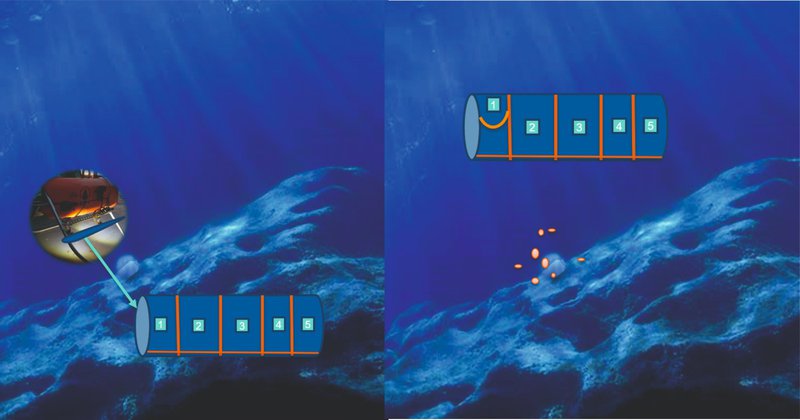
In the depths of the ocean, pet, bag etc. pollution from waste will be based and clearing ocean depths will be at the forefront. In this project, The Orpheus unmanned undersea vehicle built by NASA and the Woods Hole Oceanographic Institution (WHOI) will be used as a resource. For the equipment to be integrated into the undersea device,we will use our model called MKA-G1.This model is pressure resistant at these depths and is planned to be designed in cylinder form using graphene, which was awarded the Nobel Prize in Physics in 2010. Our model MKA-G1was designed as a model covered with graphene substance and 5 sections. Orpheus will be integrated into the stock anchors of the unmanned undersea vehicle to maintain proper balance and measure. The bacterium Ideonella Sakaiensis,which is found in Japan in 2016 and is described as plastic-fed bacteria on the inside of this design,will be put in position in this cylinder tube. The reason our MKA-G1 model is divided into 5 parts is by using the image processing algorithm of the Orpheus unmanned submarine vehicle to release these bacteria one by one to the places where the plastics were identified by the cameras. In this way, direct contact of bacteria to plastic will be provided.
By coming into contact with a polyethylene,these bacteria are resolving the polyethylene completely into elements within 6 weeks. Carbon from these elements will join the structure of living things in the sea, while hydrogen will decrease the concentration of salt in the water,and finally the chlorine will be supportive in the cleanliness of ocean waters process.
References https://www.youtube.com/watch?v=B2HYaJBSxWEhttps://futurism.com/nasa-whoi-orpheus-deep-sea-submarine
https://en.wikipedia.org/wiki/Ideonella_sakaiensis#Degradation_and_Assimilation_of_PET
https://tr.wikipedia.org/wiki/Arkea
https://www.kaggle.com/katexu/trash_detection
http://www.hurriyet.com.tr/teknoloji/tuy-kadar-hafif-celikten-guclu-madde-gelistirildi-30186367
https://bilimvegelecek.com.tr/index.php/2019/04/15/evrimin-insanliga-kiyagi-plastik-yiyen-ideonella-sakaiensis/
https://www.fizikist.com/plastik-yiyen-bir-bakteri-turu-kesfedildi/https://evrimagaci.org/grafen-nedir-malzeme-biliminin-nobel-odullu-basarisi-7568https://www.nature.com/articles/s41467-019-09326-3
https://www.youtube.com/watch?v=g7UguW02GfQ
https://www.ted.com/talks/morgan_vague_this_bacteria_eats_plastic/transcript?language=tr
http://www.aljazeera.com.tr/haber/tuy-kadar-hafif-celikten-guclu-madde
https://www.xtrlarge.com/2017/01/18/celikten-kuvvetli-tuy-kadar-hafif-grafen/
https://onedio.com/haber/tuy-kadar-hafif-celikten-guclu-madde-gelistirildi-595634
https://www.dijitalx.com/2017/01/11/bilim-insanlari-celikten-10-kat-guclu-3d-grafen-uretti/
https://www.webtekno.com/elmasin-yaninda-cam-gibi-kaldigi-dunyanin-en-sert-6-materyali-h70750.html