
Hercules| Trash Cleanup
Project Details
Awards & Nominations
Hercules has received the following awards and nominations. Way to go!

The Challenge | Trash Cleanup
Microplastric cleaner with microbial mat incubator .
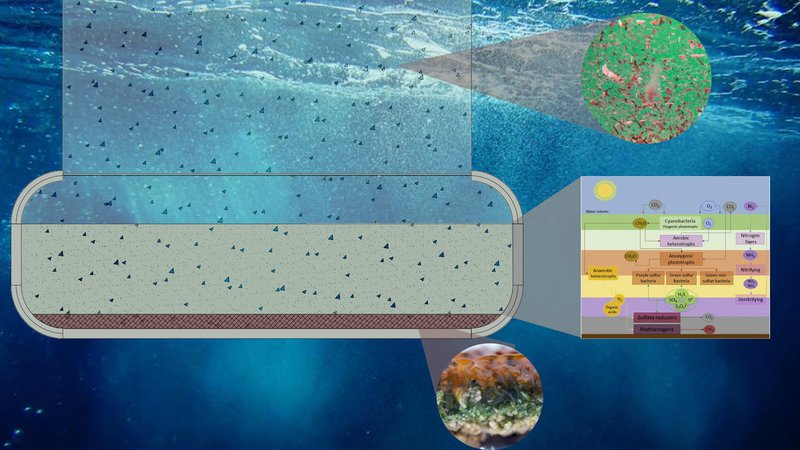
We have developed the Cleaning Flotter, our system is based on a container that it's full of a microbial mat, this environment can eat and degrade some of the microplastics, and the not degradable plastics are located as sediments in the base of container.
Our team:
Juan Hardoy – Architect
Carlos Zambrano – Paleontology
Agustín Lujan – Student at Automation and Control Engineering.
Luis Narvaez – Student at Aeronautical Engineering
Gastón Leonardo Mamani – Student at Aeronautical Engineering
Background
When we think about the challenges that we are facing as a society in this modern age, we usually never forget to mention puberty and human health, but how could we get our wealth and health without taking care of the place that we are living in?
There are two possible destinations to our waste: to bury it underground or to have it end up in the ocean, and we all know what happens when all the planet is using the ocean as a garbage bin.
A huge trash island is collapsing the pacific right now, and the US government is starting to take action to recollect all the big stuff, but at the same time there is a big silent problem, because this trash is creating what is known as "microplastic particles", small plastic pieces smaller than 5 mm long, that are covering all the existing water, and end up eaten b fish and other living animals in the oceans that in turn we eat ourselves.
What it does
The microorganisms often form communities adhering to a solid surface to form complex ecological assemblages in different habitats around the world. Microorganisms can form a biofilm of complex microbial mats, wherein a wide variety of ecological interactions exist. Microbial mats are benthic, vertically layered, and self-sustaining communities that develop in the liquid-solid interface of various environments. Microbial mats comprise millions of microorganisms belonging to different species, which interact and exchange signals, embedded in a matrix of exopolysaccharides and nutrients to enable a greater flow of resources and energy for the survival of the community: this matrix is perfect to capture microplastic in the oceans. The microbial mats have lived for 3500 millions of years near the coast, but the competition with multicellular organisms forced the mats to move to extreme environments such as hypersaline ponds, hot springs, and sulfur springs, where environmental conditions restrict and limit the growth of some multicellular and eukaryotic organisms. The role of microbial mats has been crucial throughout the history of the Earth for the composition and modification of the atmosphere, producing O2, H2, CH4 and today can change the oceans by degrading microplastics. The compounds produced by these microbes are products of processes such as photosynthesis, nitrogen fixation, denitrification, metal reduction, sulfate reduction, and methanogenesis. The microbial mats measure from millimeters to several centimeters, contain hundreds of millions of bacterial cells per centimeter, consisted of various basic biofunctional groups such as Cyanobacteria, anoxygenic photosynthetic bacteria, green sulfur bacteria and purple bacteria, aerobic heterotrophs and anaerobes, sulfate-reducing bacteria, sulfur-oxidizing bacteria and methanogenic archaea. The microbial mat is extremely sensitive to constant disturbances and fluctuations in certain parameters such as light, temperature, and pressure have an effect on their diversity.
In the last years, multiple research groups have found several bacteria who live free and can degrade microplastics, but getting rid of microplastics like this is extremely hard work. Some examples are Erythrobacter, which is capable of degrading plastic, and Pseudomonas veronii, which have been used to clean oil spills: other examples are on the table . But some bacteria like Photobacterium rosenbergii, that degrades microplastics, live in coral reefs and produces some substances associated with coral bleaching. However, if these bacteria live in microbial mats the harmful substance can be degraded by others microorganism.
Several investigations demonstrate that not all microplastics can be degraded by bacteria, this is exposed in the next table. In the microbial mats, all excretion substances such as carbonate, silicate are deposited on the bottom, thus , all plastics that cannot be degraded would precipitate and can be removed from the incubator.
Our design of cleaning-floter is composed of three parts, the buoy for buoyancy, cables, and dampers to give stability to the system, and the incubator where the microbial mats grow. Our device (cleaning-flaoter) allows the microbial mat to survive in the open sea, near the plastic islands and with a controlled environment and is isolated from fish and other marine animals that can attack it.
The base of cleaning-floaters has five meters in diameter, and is eighty centimeters tall for gel microbial mat or thirty centimeters tall for degrading microbial mats. It has a depth of 30-100 meters, these are located near mid-latitudes, where the conditions of temperature, sunlight, surface currents and energy [A5] by the waves are smooth [A6] near to the plastic islands.
Our team encountered the following problem: there are different types of micro-ecosystems of microbial mats, so we propose two possible types of mats that can help us control the microplastics. The first would be to make mats that crest rapidly and produce a large amount of gel that catches the microplastic, which we named “gel microbial mat”. The second would be to take a mat that contains plastic degrading bacteria that we named “degrade microbial mats”.
The second problem is the growth and stability of microbial mats. For this we propose the following solution: first, start with a protected mats farm on the seabed, under the same conditions of temperature, salinity, depth and sea currents as those found in the open sea. Second, place the incubators very close so that they migrate, or we can transport them manually until they are fixed to the incubators. Third, transport the incubators to the plastic islands without removing them from the ocean.
Built With
We control our project using Arduino boards since these can efficiently control all the sensors that our project has, receive or send data and also we can adapt it for new functions according to the requirements we may need.
Our project was designed by a spider net system with many cleaning-floaters, which contains a master cleaning-floater that receives information and status from the rest of them, so that it can be retransmitted. The retransmitted information contains the weight of the cleaning-floaters, which would indicate whether they got infilled with sediments and debris from the microbial mat, as well as if there are external multicellular invading organisms such as mollusks and cnidarians that might affect the mat.
The buoys have internally a set of sensors and antennas that make it possible to administer and either remotely or locally control them through a web application. These buoys control and manage the correct operation of solar panels, batteries, sensors, and there is the possibility of issuing internet through omnidirectional antennas and P2P (Peer to peer) to supply the nearby islands or boats with the internet.
All the buoys are connected wirelessly to the boss that sends all the alerts and the location to the satellite, the battery has great autonomy in case the solar panels fail or have to emit emergency signals.
The main buoy is the one that contains all the electronics capable of receiving all the information wirelessly through LoRa (Low power and wide area system) of all the secondary buoys and in case of any problem send it to the satellite and receive an answer.
Each week it sends the location and general information of the buoys: if there was a problem the information would be sent instantly: however if the solar panels stopped working or there was an emergency, the backup system would still work for several days without the solar panels.
An omnidirectional antenna layer could be added to broadcast the internet and this antenna would be used so that when a ship passes through its radio could pick up this internet signal. A P2P antenna could likewise be added to connect with some nearby island.
Scientists will be able to see the real-time status in buoys through a local web application, in whichthey could observe alerts and activate or defuse antennas, sensors and other functions.
Future Plans
We can improve our project in many different ways, it's important to understand that we will be iterating the design performance to ensure the greatest capture and transformation of plastic. This will take us many trial and error tests.
Many factors can determine a better capture of plastic, from the design of the capsule, the depth to which it should be placed, the distance between each of the buoys, among others.
Nowadays we have no funding for our project, so it's no possible for us to continue our research, but if we win the Spaceapps Challenge this will allowed us to find some investors and maintain our commitment to keeping going forward and make the cleaning flotter a real solution for our oceans.
NASA Resources
We have used different NASA Resources to complete our project, as we mentioned before the essential technology of our project are the Microbial Mats because the microbes conforming them can break down plastic.
-We found very interesting the research "Microbial Mats Offer Clues To Life on EarlyEarth"(Link:https://astrobiology.nasa.gov/news/microbial-mats-offer-clues-to-life-on-early-earth/). The study was supported by the Exobiology and Evolutionary Biology element of the NASA Astrobiology Program.
-As is mentioned in the article: “Most of the history of life on Earth was dominated by microbial life, and if we want to anchor our understanding of microbial evolution to this history of life we need to look at what information we can pull out of the sedimentary record,” said study lead author Tyler Mackey, a geo-biologist at the University of California, Davis.
-In addition to this relevant information about the microbial evolution, we found very useful the article, "What are mats? What are stromatolites? Why do they form layers? Discover how microbes work together to form a microbial mat."
(Link:https://spacescience.arc.nasa.gov/microbes/about/index.html),
-As is explained in the link above: "These Microbial mats are found in modern times include extremely productive salt marshes and high energy carbonate beaches such as in the Bahamas". -NASA Ames Research Center.
-Not only the mat information was valuable for our team to complete our purpose, but we know that we must understand the beginning of the problem: how does the plastic end up in the ocean and how does it move once the trash is floating. This is relevant information so we can locate our cleaning system at the correct location.
-The study "Garbage Patch Visualization Experiment" (Link: https://svs.gsfc.nasa.gov/4174) could help with this issue.
T video states: "We wanted to see if we could visualize the so-called ocean garbage patches. We start with data from floating, scientific buoys that NOAA has been distributing in the oceans for the last 35-year represented here as white dots."
-Circulation Oceanica Nasa https://podaac.jpl.nasa.gov/OceanCurrentsCirculati...
Space Apps Offers
We are very grateful to all the Space Apps Collaborators, they were very friendly and took care of all the details to make sure we work in an inspiring and interesting work environment: the team members met us directly at the event and both the facilities and the employee service were excellent, they helped us with our doubts and motivated us to give our best.
Tags
#cleaner flotter #plastic particles #cleaning ocean #hercules team #hercules moron #hercules nasaspaceaaps #microplastic #microbial mat #bacteria #NASA #trash
References
-Marine scientists find toxic bacteria on microplastics retrieved from tropical waters: When these tiny pieces of plastics are ingested by marine organisms, they may accumulate and be transferred up the food chain. ScienceDaily. Retrieved October 18, 2019 from www.sciencedaily.com/releases/2019/02/190211110348...
-Appl Microbiol Biotechnol (2018); Urbanek, A.K., Rymowicz, W. & Mirończuk, A.M. Appl Microbiol Biotechnol (2018) 102: 7669. https://doi.org/10.1007/s00253-018-9195-y
-Interaction between microplastics and microorganisms as well as gut microbiota: A consideration on environmental animal and human health. Lu, L., Luo, T., Zhao, Y., Cai, C., Fu, Z., & Jin, Y. (2019); Science of The Total Environment, 667, 94–100. https://doi:10.1016/j.scitotenv.2019.02.380
-Microbial mat ecosystems: Structure types, functional diversity, and biotechnological application. C, M, Prieto., E, Valencia,. G, Santoyoa; Electronic Journal of Biotechnology. Volume 31, January 2018, Pages 48-56 https://www.sciencedirect.com/science/article/pii/..