
Power of Ships| Trash Cleanup
Project Details
The Challenge | Trash Cleanup
Power of ships
Power of Ships is aimed to collect plastic in oceans exploiting the ships' motion without adding operational power. Also, we provide a website to connect the shipping companies with plastic recycling companies to
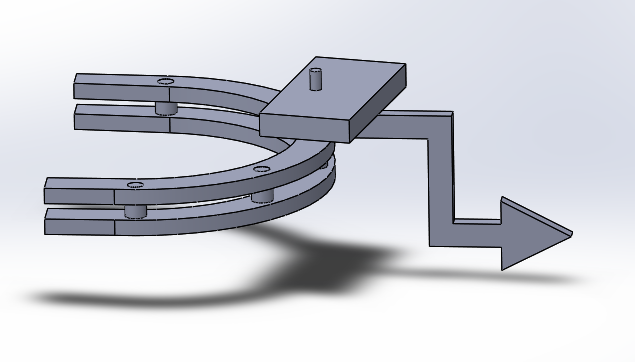
The solution was an inspiration by the clean-up technology installed in the great Pacific Ocean, which is basically a U-tube floater to trap plastic depending on the waves motion. However, there were many challenges that we tackled.
Challenges faced and design requirements:
- The coverage range of the system limits the amount of trapped plastic. It can't catch plastic that spreads to millions of kilometres around or plastic that sinks
- The technology of installing and fixing such a large system - 600 m long- in The Great pacific Ocean costed up to 40 Million dollars.
- Due to collecting and aggregating plastics by a stationary system, animals get attracted to it, risking entanglement.
- Bacteria and algae can grow on the system, increasing its weight and affecting its behaviour
Our modification: By being connected to ships, our system exploits the ships routes which are near to coastal areas, the main source of plastic, so it catches it before having time to sink or spread around.
Our modification: By making use of the ships motion, our solution requires no extra fees for transporting the plastic to land. Moreover, its simple mechanical design makes it very low at cost
Our modification: The fact that our system is dynamic makes it an improbable shelter for marine creatures, preventing any disruption to their lives.
Our modification: Our dynamic system makes it very hard for marine life to be established on.
Future Plans
Imbed a filtration system within our project to filter plastic out of the other materials collected. This can be done using waterproofed capacitive sensor that detects the capacitive factor of the material or photoelectric sensor that detects the transparency of the material. This way the project will be more specific and time effective.
Resources:
- References:
- Solid works software: video simulation link https://www.youtube.com/watch?v=NdRE3TtVGXQ&feature=youtu.be
- Wix website builder: website link https://sarahussein2886.wixsite.com/mysite
- Sketchup
- Prezi: presentation link https://prezi.com/view/d3wTTprdOdFm5KvlQhFd/
[1] Woodall, L. C., Sanchez-Vidal, A., Canals, M., Paterson, G. L., Coppock, R., Sleight, V., … Thompson, R. C. (2014). The deep sea is a major sink for microplastic debris. Royal Society Open Science, 1(4), 140317. doi: 10.1098/rsos.140317
[2] Stein, V. (2018, October 5). A massive plastic cleanup project provokes hope and skepticism. Retrieved from https://www.pbs.org/newshour/science/a-massive-plasticcleanup-project-provokes-hope-and-skepticism.