
Refactor| Trash Cleanup
Project Details
The Challenge | Trash Cleanup
SeaDood : Ocean's Bestfriend
SeaDood is a project that aims to solve the problem related to the Great Pacific Garbage Patch (GPGP) that focuses on a cheaper but effective, affordable, sustainable and expandable solution rather than one grand, hyper efficient yet expensive solution.
Background
The project started off with the curiosity of 2 people regarding the problem of GPGP. These duo, the only members of the team, researched about the current solutions that are in implementation and found out that, for something so important to us, because of budget constraints, not much had been done to tackle the problem.
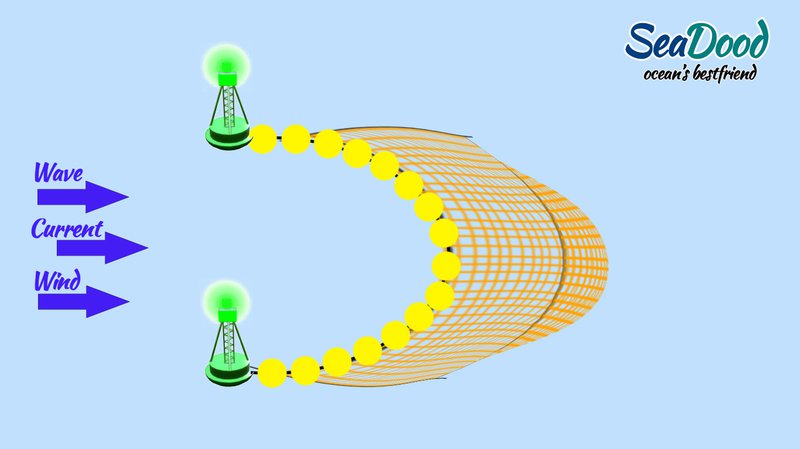
Therefore, we came up with the design of SeaDood, a passive sea debris collector that uses the natural force of the ocean wind, waves and current to filter out the debris before fetching it out of the ocean and bring it back to the land for processing.
SeaDood itself is a homonym of the Malay word, "sedut", which means suck. It is also the combination of the word "sea" and "dood", which means sea and best friend ,respectively, where we hope for SeaDood to become the ocean's best friend in helping it solve its problem.
Resources
The resources that we use includes the datasets as provided by NASA through one of its project, PODAAC. From there, we extract the data and compare it with another set which is from another of NASA's project, Ocean Colour. By combining both of the datasets only then we proceed to make inference on how to design the best solution feasible.
Challenges Faced
We are fully aware that there would be plenty of challenges knowing that the location of our challenge is the Great Pacific Garbage Patch. One of the major challenges is to come up with the solution to clean the trash. It took us a few prototype until we get to the current one. The next major challenge is questioning ourselves the durability of our product. The ocean is not always calm and our product must be able to withstand extreme weather far off-shore.
Besides, we also need to consider how to bring the trash back to shore once it is collected. We need to come up with a solution on how to implement our solution with minimum cost in order to make it to sustainable. It took us days of brainstorming and getting feedback from our mentor and coach to come out with the funding solution for our SeaDood model.