
ZPP - Zero Plastic Project| Trash Cleanup
Project Details
The Challenge | Trash Cleanup
ZPP - Zero Plastic Project
We are a group of students of Aeronautical Engineering, proposing a project to clean the plastic waste of the oceans
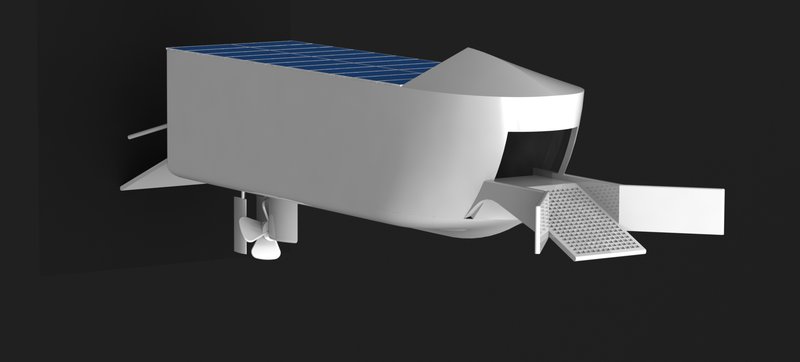
Our project is based on a series of nautical drones capable of navigating by their own means collecting the plastic waste found in the ocean.
Several sources are available for the detection of plastics.
One of those we know is the sea currents. Then we know where the garbage islets are going to be found or formed. It is important to clarify that the analyzed dishes are macro plastics. Looking to go further its applicability for micro plastics. Then, knowing the currents, we can use other forms of location.
First we use visual detection with a field of vision large enough to cover large areas of the ocean. Detecting pixel patterns other than those of the sea that can alert the first possible location of plastics and then with a second satellite that have a much smaller field of vision, but with greater precision adjust the radar wave parameters which will be launched in order to detect the difference in pixels with better quality.
Some papers are found but few indicate that in certain infrared patterns the spectral signature of plastics can be detected.
Nautical drones have electric motors and solar panels to recharge their batteries. They can load buoys specially designed to store garbage and compress it and then be picked up by another ship, taken to land and finally recycled. The buoys have an EPIRB-RLS radio beacon capable of transmitting a signal when the buoy container is full and since this radio beacon also has GPS, it allows to detect the location of the drone with the buoy.
The drones are designed with a conveyor belt to collect the trash and throw it into the container buoy. They are also designed not to damage and / or catch fish.
Its manufacture is simple with common and typical materials treated to resist salinity and various conditions.
The project involves international cooperation providing benefits to ships that help transport full and empty buoys.
References:
- https://www.shipmap.org/
- https://podaac.jpl.nasa.gov/OceanCurrentsCirculation
- https://www.meteorologiaenred.com/corrientes-marinas.html
- https://agua.org.mx/estas-son-las-islas-de-plastico-que-contaminan-mares-y-oceanos-ecoportal/
- https://es.wikipedia.org/wiki/Cospas-Sarsat
- https://es.wikipedia.org/wiki/Radiobaliza_de_emergencia
- https://es.wikipedia.org/wiki/Sistema_de_boyado_mar%C3%ADtimo_IALA
- https://www.sealite.com/wp-content/uploads/2017/12/TRIDENT-3000-HEX_Spec_V1_2015_Spanish.pdf
- https://www.areadepymes.com/?tit=container-normal-20-pies-containers-maritimos&name=Manuales&fid=da0marb
- https://www.ecured.cu/Boya
- http://www.oceansentry.org/es/23766/
- https://news.un.org/es/story/2019/03/1452961