
Project Details
Awards & Nominations
THemma has received the following awards and nominations. Way to go!
The Challenge | From Curious Minds Come Helping Hands
SateTrIn
Developing innovative techniques of Artificial Intelligence of how universe can help humanity preventing environmental hazards and traffic accidents.
From Curious Minds Come Helping Hands| → SateTrIn
Developing innovative techniques of Artificial Intelligence of how universe can help humanity preventing environmental hazards and traffic accidents.
¿ What is SateTrIn?
PROBLEM:
Road accidents have become a major issue for governments, researchers and vehicle manufacturers in recent decades. However, accidents are unfortunate and often occur on the road causing deaths and damage to infrastructure as well as health injuries. According to the World Health Organization (WTO) report on December 7, 2018, approximately 1.35 million people die each year as a result of road accidents. Completion of time has shown that road traffic injuries are the leading cause of death for children and young adults aged 5-29 years. The World Health Organization also estimates that about 25% of human deaths and diseases worldwide are linked to environmental risks. Our proposal is a combination of traffic accident prevention and environmental hazards preparation, using tools from NASA & USGS FEWS NET Data Portal.
SOLUTION:
Our world is quite complex and manifold. There are many decision parameters that relate to a rather complex way. A change in the bearing state of one of the parameters affects many parts of the system and the effects are often unexpected. Classical examples of forecasting, diagnosing and adjusting or optimizing are not sufficient to address the extremely complex social systems that comprise the engineering and fundamental design of transportations.
Artificial Intelligence offers a variety of tools to fully address problems related to optimization, classification, control, search, inference, knowledge acquisition and data processing. In other words, Artificial Intelligence allows imagination and creativity to use its tools. Typical applications will consist of detection systems (fire, flood, high wind, presence or non-movement of vehicles) and incident response, risk assessment and information transfer to the traveler in real time. So will the concepts of smart vehicles and automated motorways.
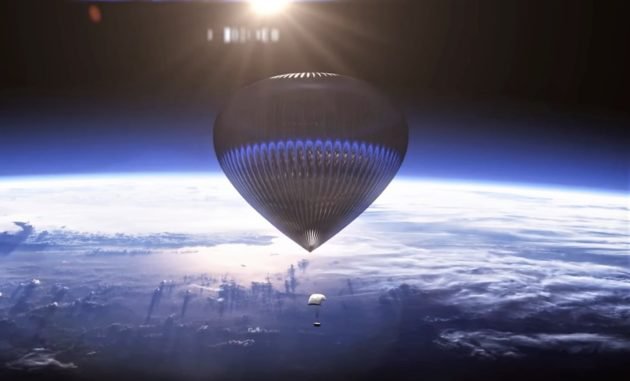
An optimum and highly future-proof technique is the concept of SateTrIn, a highly innovative dual-function satellite balloon and instantly intertwined with the demands of modern technology. It consists of controlling weather events using Bluetooth - Wifi alerting existing vehicles (via specially designed lamp) that they are approaching potential real-time environmental threats (e.g. earthquakes, electromagnetic fields, floods, light pollution, noise). pollution, vibration, x-rays). On the other hand, through the use of GeoCLIM information, it will receive a signal for the realistic location of vehicles at any time. When these tend to collide, SateTrIn will automatically repel vehicles in order to avoid potential road accidents.
Our proposal is to implement it in the Libyan state, where, according to statistics, has by far the most deaths per capita - 73.4 per 100,000 inhabitants.
ANNOTATION
The ultimate value of Artificial Intelligence techniques applied in transportations accidents and environmental hazards is directly related to the true intelligence of those who will develop and apply them.
References:
https://earlywarning.usgs.gov/fews/software-tools/...
https://earlywarning.usgs.gov/fews
https://interestingengineering.com/new-inexpensive...
https://www.openstreetmap.org/about
https://www.statista.com/chart/4394/the-worst-coun...
https://worldview.earthdata.nasa.gov/
https://www.worldatlas.com/articles/the-countries-...
Artificial Intelligence for Europe, European Commission, April 2018.
Boucher P., How artificial intelligence works, EPRS, March 2019.
Boucher P., Why artificial intelligence matters, EPRS, March 2019.
Department of Infrastructure and Regional Development. Traffic and Congestion Cost Trends for Australian Capital Cities; No. Information Sheet 74; Department of Infrastructure and Regional Development: Canberra, Australia, 2015; pp. 1–39.
Dresner, K.; Stone, P. Sharing the road: Autonomous vehicles meet human drivers. In Proceedings of the 20th International Joint Conference on Artificial Intelligence (IJCAI), Hyderabad, India, 6–12 January 2007; pp. 1263–1268.
Mahamuni, A. Internet of Things, machine learning, and artificial intelligence in the modern supply chain and transportation. Def. Transp. J. 2018, 74, 14. Available online: https: //insights.samsung.com/2018/05/22/internet-of-things-machine-learning-and-artificial-intelligence-inthe-modern-supply-chain-and-transportation/(accessed on 27 September 2019).
Minsky, M.; Papert, S. Perceptron Expanded Edition; MIT Press: Cambridge, MA, USA, 1969.
On the road to automated mobility: An EU strategy for mobility of the future, European Commission, May 2018.
Taamneh, M.; Alkheder, S.; Taamneh, S. Data-mining techniques for traffic accident modeling and prediction in the United Arab Emirates. J. Transp. Saf. Secur. 2017, 9, 146–166. [CrossRef]