
Algien| Rise to Resilience!
Project Details
Awards & Nominations
Algien has received the following awards and nominations. Way to go!
The Challenge | Rise to Resilience!
Nature at work
Creative use of otherwise disposed and purposeless elements.
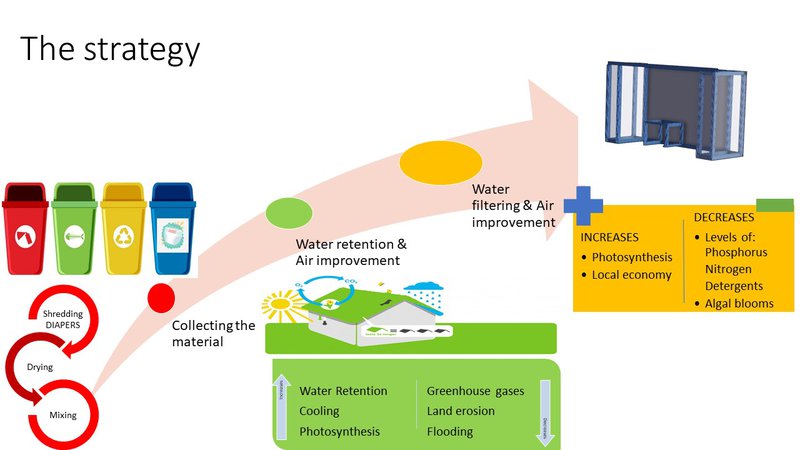
How we had dealt with "Potential Considerations".
- How will you collect, analyze and visualize multiple data sets to identify areas vulnerable to floods and other hazards?
- By using https://data.nasa.gov/ and https://www.copernicus.eu/en, we are able to visualize and analyse data in SNAP.
- What is the best way to visualize data layers of vegetation and other natural assets?
- We have used SNAP, for better visuals.
- How will you assess best locations to convert grey (buildings, roads, etc.) to green?
- Places that are vacant, yet capable of serving green purpose are our strategic points, also places where we need to breath green the most.
- How can your tool guide planning, mitigation, transition, and restoration efforts?
- Testing to make sure it's effectiveness and supervising.
- How can you find ways to improve effectiveness of existing green infrastructure?
- By searching the existed, deriving ideas from environment, utilizing the most practical.
Introduction
Natural ecosystems are self-sufficient, something we’ve always been seeking for, something we have to learn from it. There are various systems that can be successfully extrapolated on human lifestyle, making if more feasible and sustainable. Learning those patterns and discovering their possible use would benefit generations to come.
Problem
Anthropogenic factors has destabilized otherwise homeostatic environment. City system impermeability to rainwaters has exacerbated soil erosion and flooding. Road water runoff, creates perfect environment for toxic algal blooms in water reservoirs. Immense traffic has produced capacious pollution, where citizens spend their time the most. Materials used for urban development has failed to create comfortable micro climate.
AttitudeOur altitude was to implement natural resources in the economically rational manner. Instead of creating new green areas, we tried to alter already existing but vacant zones. Using established technologies, but improving them in more feasible way, was our key goal to meet.
Solution
Nature is a complex of various chains of processes,working together. It is almost impossible to affect all of them together, at least from today’s perspective. Consequently, we decided to improve the ones that are more strategically reasonable. For example improving air where it matters the most.
Our methods and results
After gathering plant vegetation data from ESA satellites, we have identified major environmental problem in Tbilisi – air pollution(F1). Since population density in our capital is too high, small projects would less likely achieve our primary goal. As a result we have developed 2 plans for the same goals, working in an fulfilling manner. Also, data from NASA satellites has provided scientific evidence for chlorophyll properties in improving overall ecology(F2).
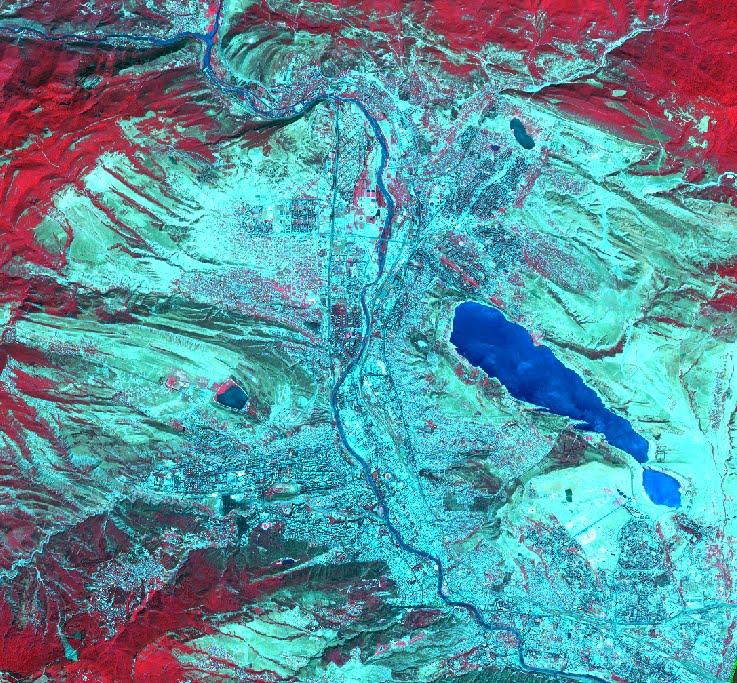 Figure 1
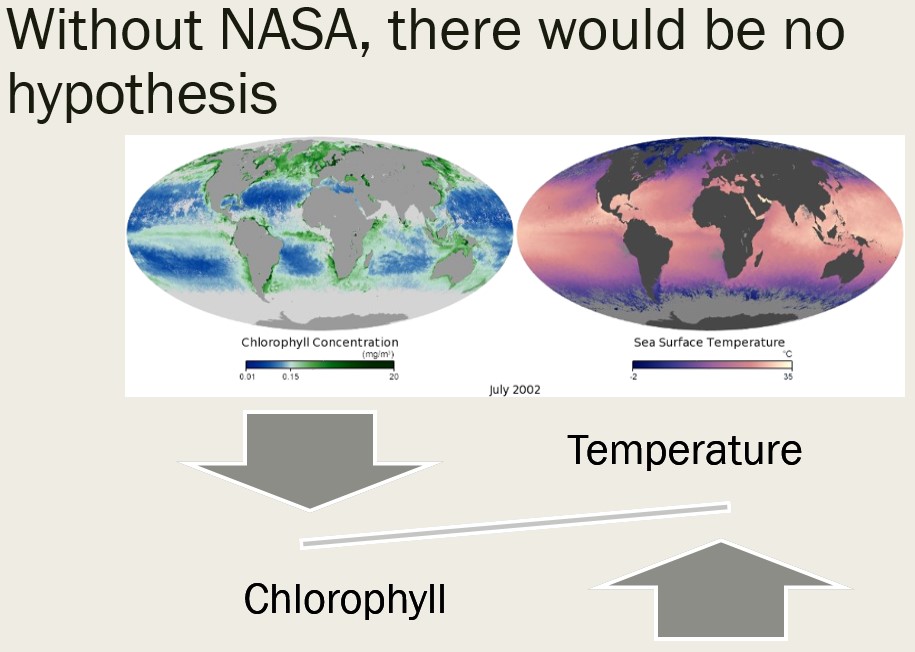 Figure 2
1. 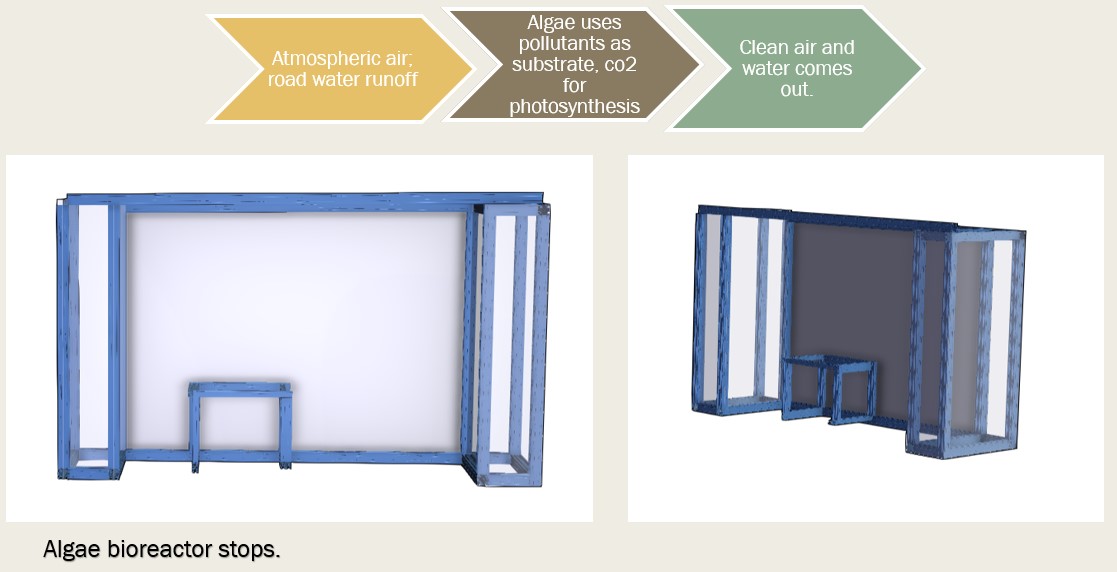 Figure 3
Algae Bioreactor(F3) – It is identified that bus stops are 3.5 times more polluted then other areas(F4). Which makes it more strategic for our goal. Using materials found in regular bus stops, we have created air purifier aquariums. Aquarium will be made from materials used for general bus stops, which will help making it cost-effective. For cleaning the air, green algae is used. It’s substrate is the local road water runoff and CO2 is given from the surrounding polluted environments.Such construction will not only improve health of the individuals using public transport, but also decrease chances for the algal blooms to occur in the other areas. Since algae in the aquarium would use those nutrients for its own good. Also, we are planning to use overgrown algae in medicine(F5). It is important to note, that aquarium will be filtrate by road water runoff, continuously circulating and leaving it to the water pipes. Also, electricity for the generator will be derived from solar panels.
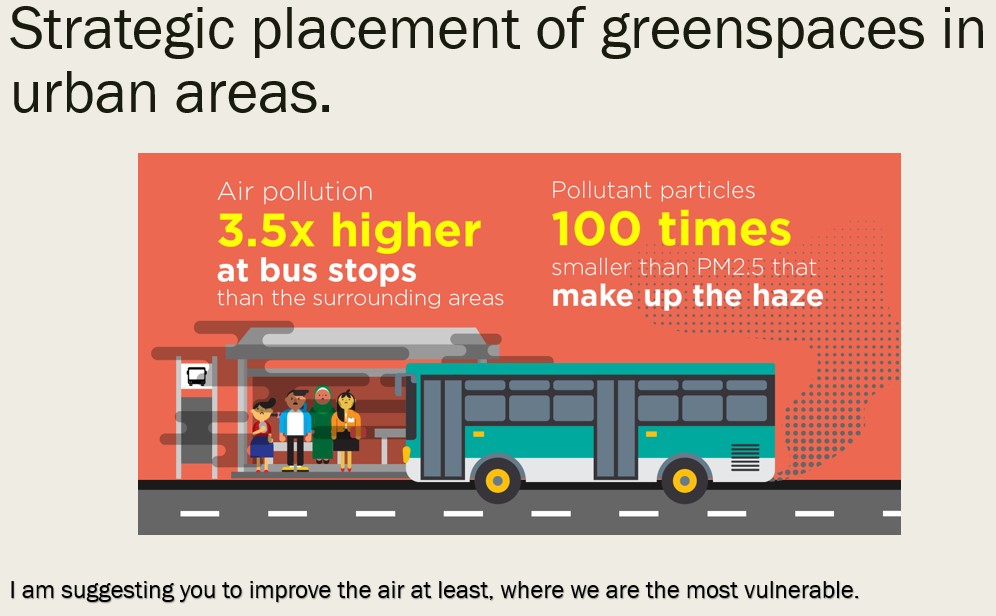 Figure 4
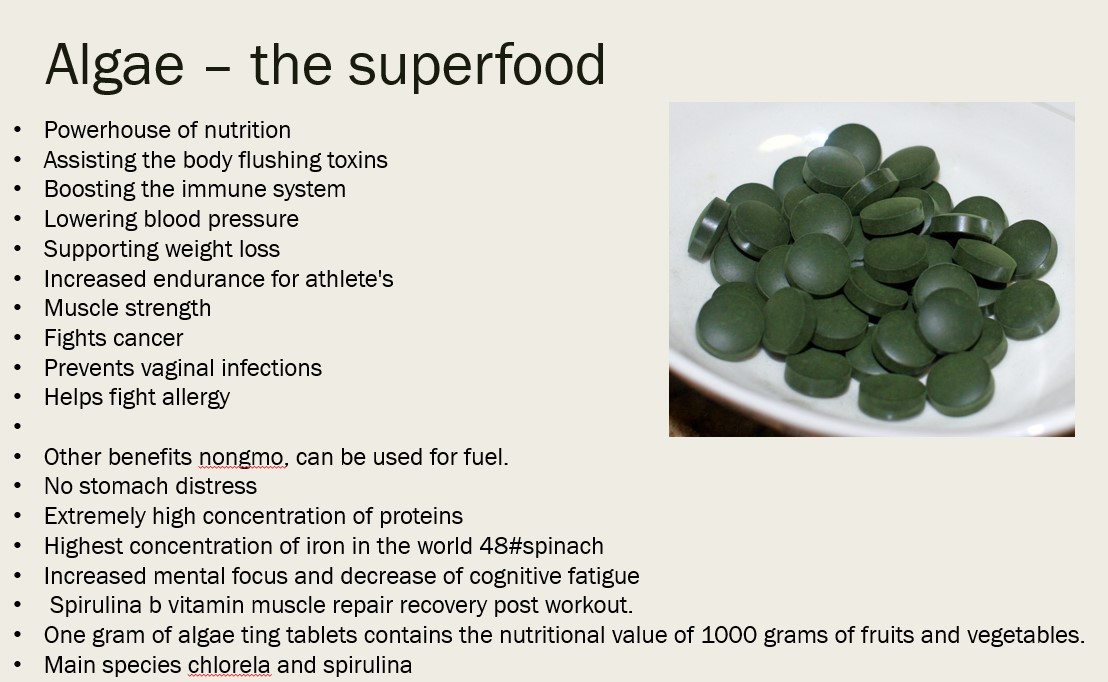 Figure 5
We have also hypothesised ways to improve the Bioreactor. It is well known, that lung's effectiveness is raised by it's surface area ratio, which improves gas exchange. On the other hand, gas bubbles are always trying their best to evade water, which has higher pressure then there is in the bubble. Consequently, we have decided to create special "Tank - Alveolus" which must be tested before popularising it(FX).
Sadly, such bioreactors would not be effective if built small and would not be economically suggestive, if built large. That being said, it should not be used for generating oxygen for the whole city. Consequently, we have decided to build them in the areas where most air pollution occurs – at the public transport stations. On the other hand, rainfall in Tbilisi was too high for water filtering to be effective, so either we had to use huge water containers, or there had to be another water retentive force to help us with. Bigger the water container is, more expensive it gets to work with it, consequently it was out of option. Searching for a better way to improve retention, we found green roof tech – established in US and Germany, having lots of positive feedback.
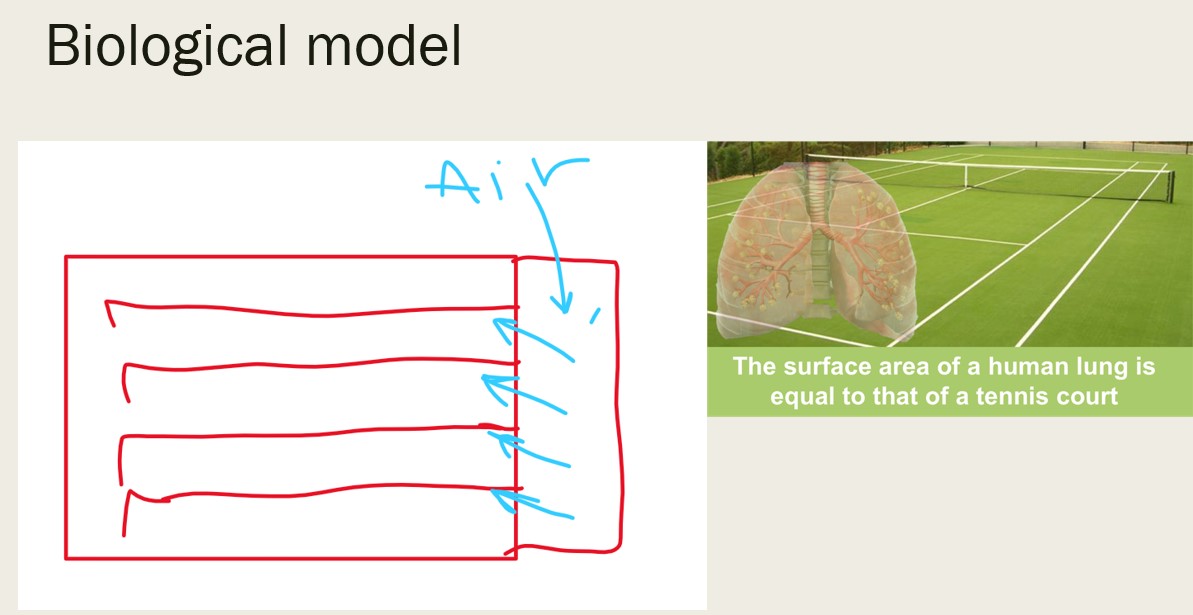 Figure x
2. Rooftop Purifiers – Rooftop is another vacant zone which can be utilized for community’s benefit, improving overall atmosphere condition. It has been implemented in various cities, including New York and Berlin, with immense success. Taking in vision those and discerning it’s limits, we found out something that would exponentially improve it’s results. In other words, we want to use hydrogel as a retention amplifier(F6). Since such material is rather expensive, we decided to use it from baby diapers, collected from dedicated recycle bins. Marketing in such case, must be efficient, since mothers would be giving away for the future of their children(F7). Water evaporating from rooftops would contribute to the decreased overall temperature, making it more comfortable and cheap to live In such areas. Flooding will get at least, less severe, whilst air quality will increase proportionally. For transforming diapers into useful agent, we've planned to shred it, dry it and mix it with the soil(F8). Sizes of the "blocks" of moss will be standard, each user will use as much as they may want to(F8).
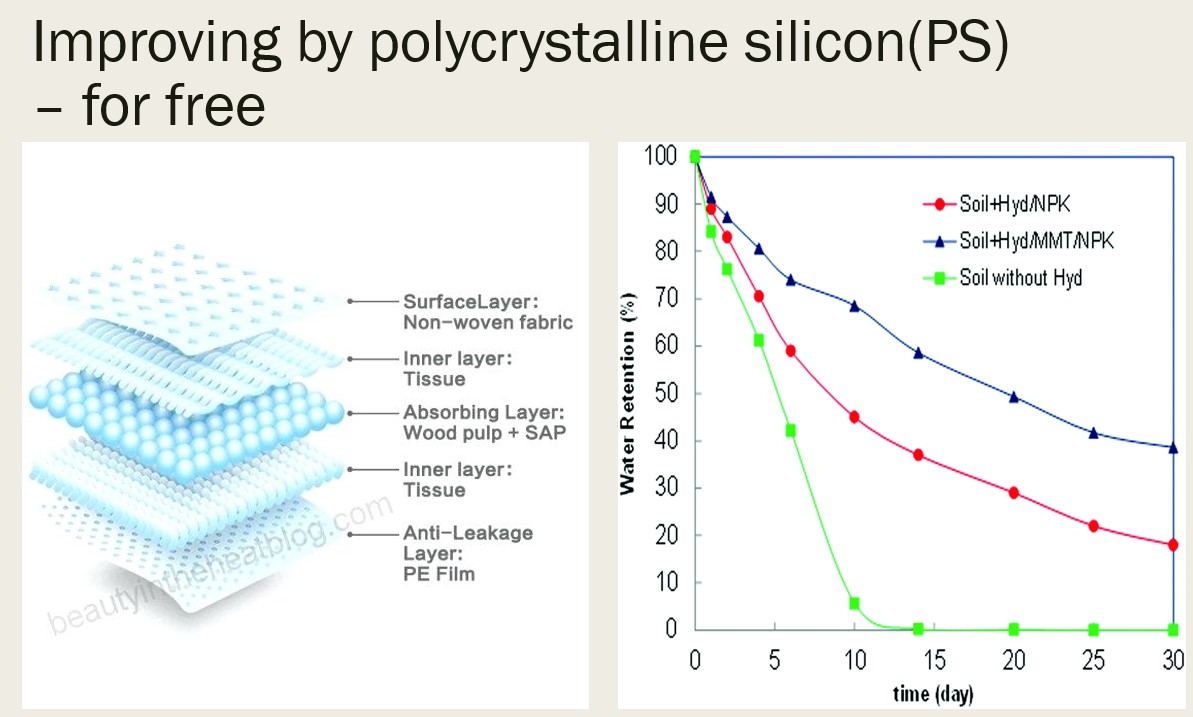 Figure 6
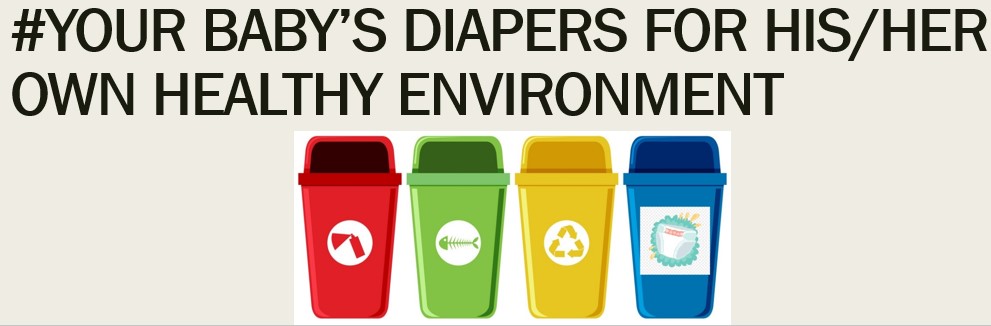 Figure - 7
Those two systems working together would not only improve the air quality at it's best, but also produce other means of ecological stability as a byproduct.
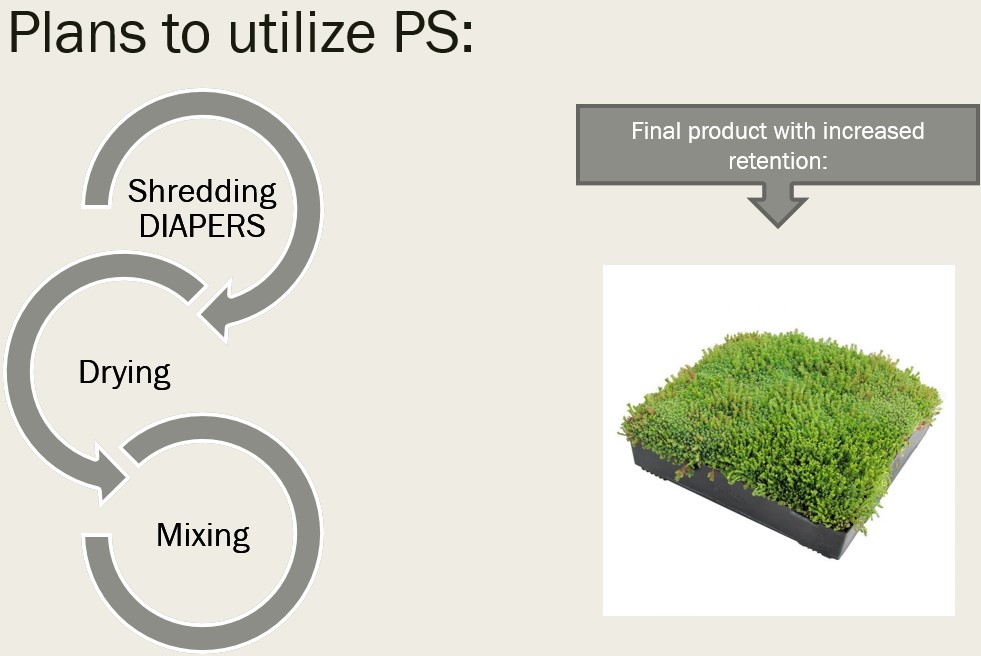 Figure 8
Figures&Materials used are as follows
Figure 1 data from ESA, processed in SNAP: S2A_MSIL1C_20190823T075611_N0208_R035_T38TMM_20190823T093342_resampled_RGB
Figure 2 Data from NASA - Chlorophyll and Temperature
Figure 3 - 3D model from vention.io
Figure 4 - "where are we the most vulnerable?" https://www.temasek.com.sg/en/news-and-views/stories/future/safe-and-cool-bus-stop.html)
Figure 5- Information from various sources
Figure 6 - Why is PS better?
FIgure 7 - Marketing
Figure X - the hypothesis
Figure 8 - how to make diapers useful
Creation of Closed Ecological Life Support Systems: Results, Critical Problems and Potentials Iosef I. Gitelson and Genry M. Lisovsky