
Helianthus| Rise to Resilience!
Project Details
The Challenge | Rise to Resilience!
Sustainable Development Aquaculture
Our study explores the local dimension of food production and examines the issues of access, environmental and community well-being. We focus our scope of study to a small-scale, local fish breeder in Kemensah, Selangor.
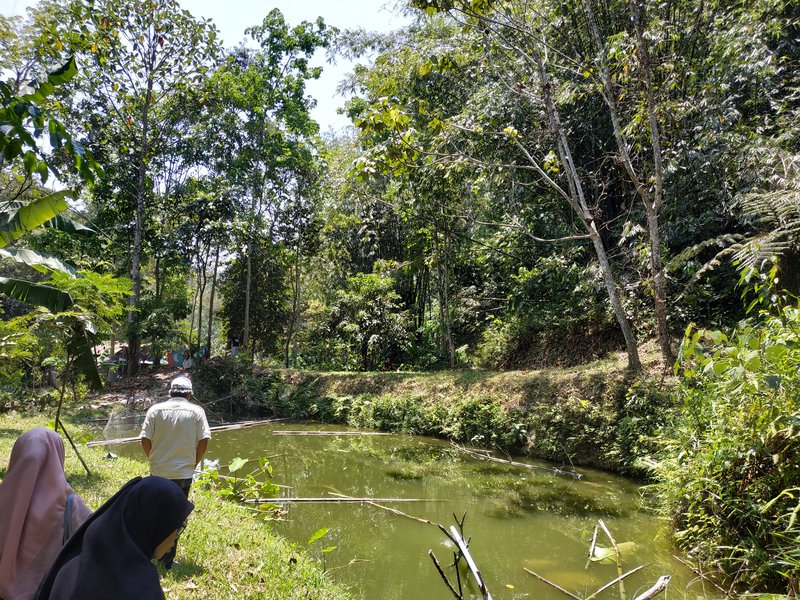
In today’s food system, producers and workers face difficulties of making profit and to provide sustainability in the business. Many of food providers especially fish breeders risk their savings and health while working. Our study explores the local dimension of food production and examines the issues of access, environmental and community well-being. We focus our scope of study to a small-scale, local fish breeder in Kemensah, Selangor. The area is designated as Malay and forest reserve. It is a suitable environment for ecotourism and have the potential to be redevelop for agriculture. In this project, we propose a design that utilize mechanical and biological system using the low impact development techniques, phytoremediation and improved aeration and circulation of waste and oxygen. The low impact development system can delay or reduce the surface runoff so that the water quality can be more emphasized. This method helps reducing the risk of soil erosion and contamination that caused by the runoff, that will help to save cost. Moreover, phytoremediation is significant to reduce the ammonium and nitrate composition that is release by the fecal of fish as well as assisting the aeration of the water pond. Aquaculture recirculating system give benefits to the environment and help in preserving the ecosystem. Beautification of the area with native plants preserve the biodiversity and reduce the impact of carbon dioxide emission and urban heat island effect. With these in mind, we hope to accomplish the Sustainability Development Goal; clean water and sanitation, responsible consumption and production and life below water.