
MAGSUS| The Memory-Maker
Project Details
The Challenge | The Memory-Maker
GearEncoders
It is well known that the climatic conditions on Venus are unfavorable for the Earthen Space Electronics to acquire any data. We at Team Magsus have attempted to extract the Veneran data using majorly only mechanical gears.
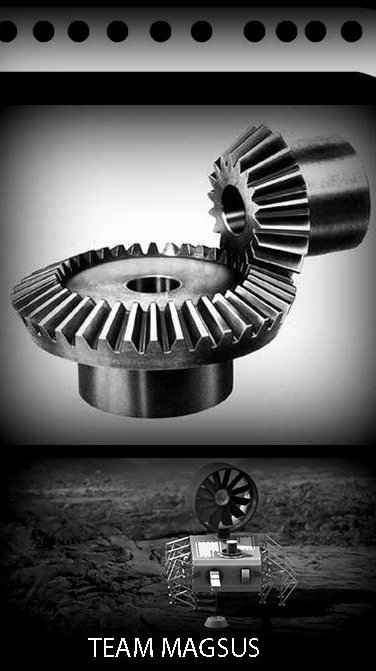
The primary challenge was to acquire any useful data on the Veneran surface without using any electronics. (ie. Only by using mechanical means).
From the database of NASA we interpreted that Venus has high velocity winds. So unlike other planets, wind is the primary source of generation rather than the sun. Also from the NASA database, it was clear to us that basic electronics like 18V, 600mA can be used and also wires and resistors. Also, in the database it was mentioned that NASA has invented an alloy that can withstand the ruthless weather of the Veneran surface.
Using all the above data from NASA and combining it in a unique way with Morse code and the application of mechanical gears, we at team Magsus have came up with the following setups:
1) A mechanical way of determining the speed and direction of the wind on the Veneran surface.
2) In case if the mechanically acquired data cannot be physically revived from the surface, we came up with a method to send that acquired data to the hovering satellite, to determine the speed of the wind.
3) We came up with a method to mechanically determine the terrain of Venus. It can determine if its soil, a liquid or a soil with traces of metals in it.
4) We came up with a suggestion to rover the Venus rover in forward and backward direction when a linear force is applied. This motion is without using electronic or electrical devices and is completely mechanical.