
Neiraw| The Memory-Maker
Project Details
Awards & Nominations
Neiraw has received the following awards and nominations. Way to go!
The Challenge | The Memory-Maker
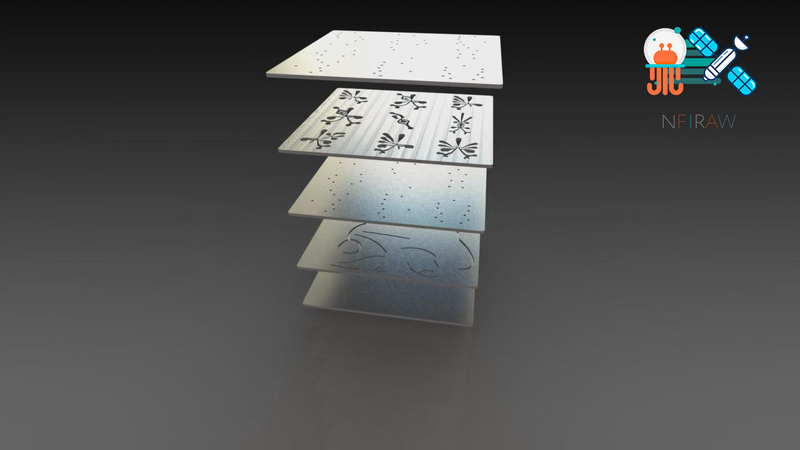
Fluid Logic Based Recorder
It`s an innovative solution suited for harsh enviroments.Usage of fluids instead of electricity opens up new opportunities for AREE (Automaton Rover for Extreme Environments)
Problematics
Venus is the second planet from the Sun and our closest planetary neighbor. Similar in structure and size to Earth, Venus spins slowly in the opposite direction from most planets. Its thick atmosphere traps heat in a runaway greenhouse effect, making it the hottest planet in our solar system with surface temperatures hot enough to melt lead. Glimpses below the clouds reveal volcanoes and deformed mountains.
Today’s weather:
- Temperature - 464°С
- Pressure - 92 times the surface pressure of Earth
- Atmosphere consist- Carbon Dioxide, Nitrogen
Venus is named for the ancient Roman goddess of love and beauty, who was known as Aphrodite to the Ancient Greeks.
Our solution
To accomplish this task, we decided to combine the components of the fluidics with the perforation-recording. Received signal is converted into a binary code, which can be recorded on a physical carrier. This solution is a perfect fit to the tasks. Microfluidic logic provides compactness and perforation-recording is a reliable and durable way to store information.

What isFluid Logic?
It`s a use of a fluid to perform analog or digital operations like those performed with electronics. Such an installation converts the resulting mechanical signal into fluid movement through specially shaped channels. Like electronics, channels are grouped into logic elements with their own inputs and outputs, the result of their operation are mathematical calculations. The system of such basic logic elements allows you to make a computer that can not only convert the received data into binary code but also operate the rover itself.
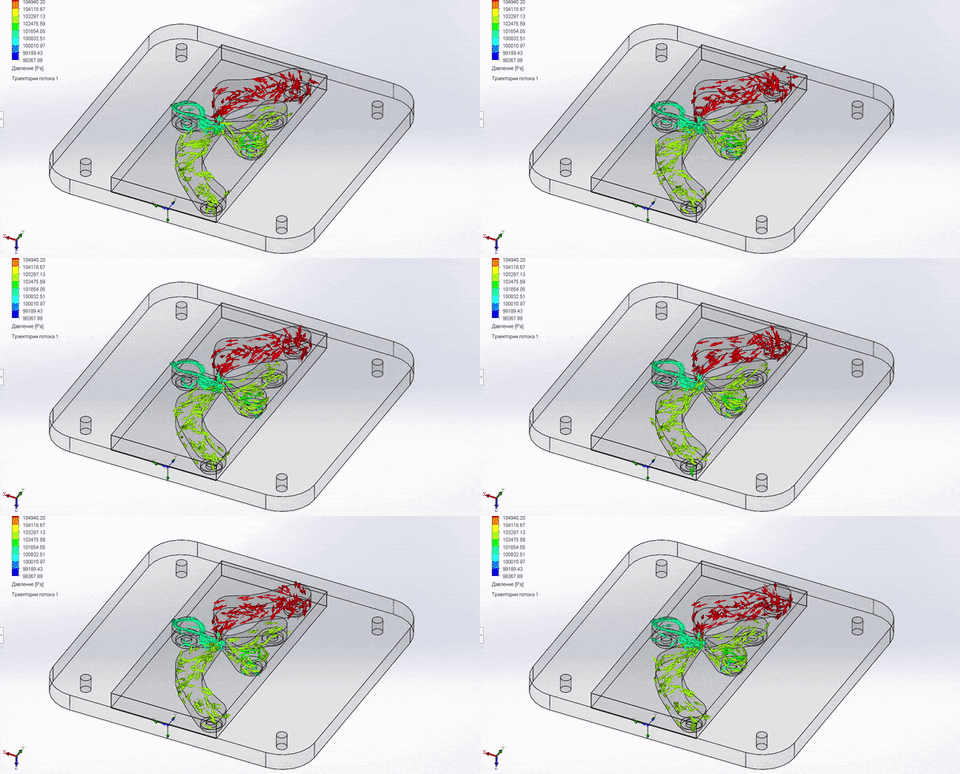
At the following simulation you can see logic gate with “AND” operation. The fluidic logic element operates in such a way that pressure in the output nozzle appears only if signals are applied to both inputs. In the case of only one of the entrances, stream will stick to one of the walls and will not reach the exit.
Logic element “AND” operation simulation:
(If gif doesn't work - https://i.imgur.com/eTP66ik.mp4)
A distinctive feature of this approach is the work on the principle of Less is more.
Minimizing the size improves performance and impact resistance.
For proper operation we use metals - they are liquid at such temperatures and are resistant to local conditions. Also, with a slightest modification of the channels - applying acid protection (for example - ceramic spraying), you can use the gases that make up the atmosphere. This approach greatly simplifies the implementation, since the system should not remain airtight.

See More - Our simulation with other element in better resolution :
The Memory
It is important for a computer to save data for work - at least registers are needed, at last - RAM and ROM.
With a temporary memory cell, everything is quite simple - we take the “2OR” element and connect one of the inputs to the output. This way, we get an element with positive feedback. Once we send a signal to the output, as the element switches, the flow starts to enter the input from the output and the element remains in this state until the supply of the feeding stream stops. Or we can apply a stream to any other output and turn off the element.
Using additional heterogeneous material, it is possible to make ROM for our fluid computer, which will store the navigation algorithm, route and so on.
Letters denote streams that implement the operations of introducing into memory S, resetting memory L, reading R. By applying pressure to the inlet of S or L, we can move a drop of liquid between the chambers. And evaluating whether channel R is closed or open, we can read data from the cell.

Another important part of any synchronous circuit is impulse generator. While the pressure in the chamber is less than critical, the stream of liquid through the channel continues to flow into the tank. If it is exceeded, the pressure of the chamber presses the jet, literally blows it out of channel and tears it off the wall, as a result it begins to flow into outside channel. At the same time, the jet exiting the reservoir works for some time as a control one. Ejection of liquid from the reservoir also occurs. Pressure in the tank gradually drops and the jet returns to its original state. Then cycle repeats.

The Recorder
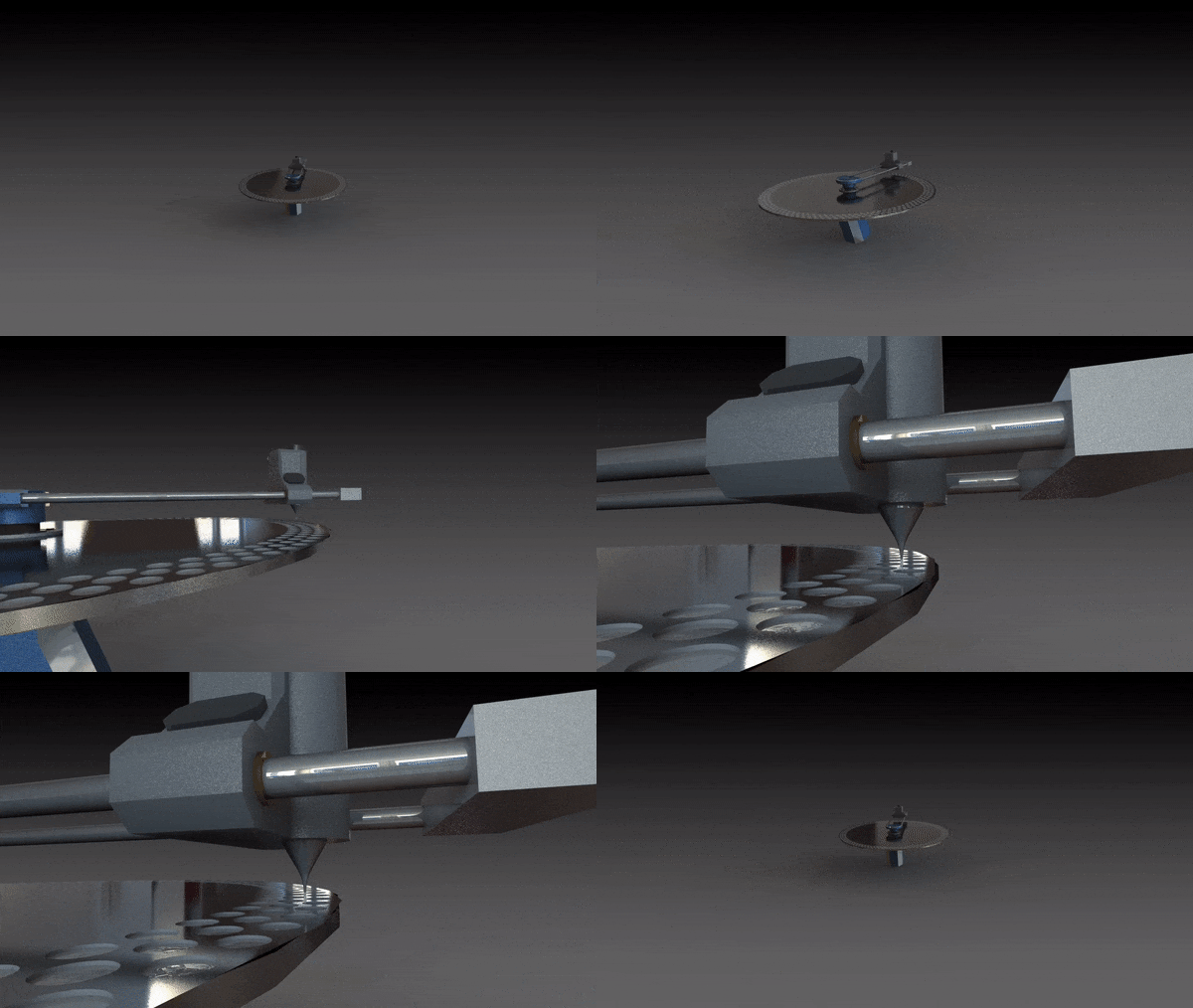
To create a long-lasting memory, we created a special recording mechanism. The principle of its operation is based on mechanical affection. Marks are applied to a specially prepared blank, which can later be read as an ordered series of ones and zeros. The disc itself is made of UNS S32109 Steel - it is heat-resistant and durable. On the disc itself, deepening’s will be made before use in the rover. Finely ground basalt powder is pressed into them. It is necessary because the perforating device cannot exert high forces. Also, this technology allows you to reuse discs. For this, the used carrier must be cleaned, and the layer of Basalt powder can be pressed in again.
(If gif doesn't work - https://youtu.be/7WJQmGKibvs)
More info:
https://github.com/Neiraw - GitHub, if you want to learn more about our ptoject
https://docs.google.com/presentation/d/1YMLwT-N6PU... - Our event presentation
Sources:
This site really helped to learn about the Planet in depth:
By the Numbers | Venus – NASA Solar System Exploration
What we know about surface of Venus:
https://photojournal.jpl.nasa.gov/catalog/PIA13001
Most full NASA report about already developed solutions:
NASA Innovative Advanced Concepts (NIAC) Phase I Final Report
Another great source about AREE:
https://www.nasa.gov/sites/default/files/atoms/files/niac_2016_phasei_saunder_aree_tagged.pdf
Lightning storms going on Venus:
https://www.nasa.gov/vision/universe/solarsystem/venus-20071128.html
Fluidics: Components and circuits
https://www.amazon.com/Fluidics-Components-Circuits-Kenneth-Foster/dp/0471267708Most of our simulations and models was made using SolidWorks:
https://www.3ds.com/products-services/solidworks/