
Project Details
Awards & Nominations
Helios has received the following awards and nominations. Way to go!

The Challenge | Fly-by-Wireless
PE-BEE
We plan to eliminate the wires used in unessential electrical functions. Instead of wires, low-power digital radio signals will send the command, and piezoelectrics will give the power to the sensors.
Background
Motivation is a main point for the development of a project, which for the team is passion for aircrafts. The great opportunity that it has to innovate in the aerospace sector, create more comfortable flights, improve airline finance, and of course taking care of the environment, these are the keys of the goal. Always keeping an attitude to improve what is offered by every member of the team in order to reach the objectives.
What it does
The functioning of wireless technologies is about the transfer of information in signal forms, since nowadays the cell phone is starting to be used in long distances in certain aircrafts, it was given the task to implement a new type of data transmission, for that different types of wireless sensors were searched; one of them was the transmission of data with X-Rays, which was a viable option because of the data security, however at the moment of implementing it in a commercial aircraft this loses importance, because the radiation that is exposed to tripulation and passengers is dangerous for human health.
After that, it was dealt with other signals types such as WiFi, which was almost an instant deleted option due to the easy access of people trying to spoil the flight; Also the RF and NFC signals. It was taken in consideration the implementation of ultraviolet rays, which were not possible to implement due to the small maneuvering space without mentioning the radiation this rays emit. On the other hand, microwave signals are disturbed by cell phones, which thinking about it, will be an essential part of the flight comfortability. It was thought working with frequencies that are located in not used zones, this with the objective, in a near future, because an aircraft that has even more signals, cell phones don’t affect and these are not affected by the electromagnetic waves that will be processed on the aircraft, besides avoiding complications with persons that have vital instruments, such as pacemaker.
For the data transmission system, these must have reliability in health aspects for passengers and tripulation; compatibility with other systems, but overall security, if the net is intercepted by a third party, this will not only have access to zones of the aircraft that control the cabin passengers, which will be lights, security seatbelts sensors, cargo service, smoke detectors on a commercial aircraft. Besides, the signals can be divided in geographic parts of the aircraft o by the systems previously mentioned. For the signals between transmitters depend on the quality between space of the transmitter and receptor, the applications that will be use are low data rate.
For the transmission of control signals of a isolated system like the aircraft itself, it was analyzed using retro technology, the reason is the interference with cell phone that have networks 3G and 4G, was taken in consideration the method of a network more powerful such as 5G, but it would not be so useful, because in a couple of years a variety of devices will have access to these networks. For a isolated system, technologies 2G it would be ideal, but due to the vibrations caused by different oscillations of the components, makes difficult the task to calculate the position. Also, this signals does not have all the time a great power.
It was reached to the idea of using piezoelectric technology, due to the environment generated during the flight, there is mechanical vibrations, this technology can operate with a great quantity inside the aircraft, in non busy area like the parts beneath the seat, services doors, generating that way, and besides reducing wiring in considerable amount.
Piezoelectrics are minerals that generate energy when they deform. The materials of this are regularly no effective if they don’t produce electricity, but using these manufactured components specially for this method, they could be implement in a lot of parts of the aircraft.
It was searched for cons for the piezoelectrics elements system it was thought in the probability that these were affected by some electromagnetic, this is because the luggage organization at the moment of boarding it would have to be very specific due to the different types of loads that go in the luggage compartments, whether they are producers of electromagnetic fields elements like speakers it would pay more attention when deciding in which compartment to put this type of loads, besides of limiting zones where piezoelectric can work. It was founded that the piezoelectric effect is related with electric fields. The piezoelectric actuators do not produce magnetic fields neither are affected by these ones. They are specially appropriated where magnetic fields can’t be tolerated.
NASA resources
According to data of NASA (1), the areas where it must be applied a wireless transmission data and technology method are the following:
-“Systems engineering and integration for the reduction of wiring and connectors”.
-“Provision for modularity and accessibility of the vehicle”.
-“Alternatives to cable connectivity for designers and system operators”.
The wiring system has different alternatives when replacing them for payload such as the implementation of a new emergency system, new components, or optical fiber, due to the increase of copper worldwide.
The potential wiring components to be replaced for wireless signals are divided in four parts:
-Low data system in interior applications:
Pressurization sensors, smoke detection, fuel quantity on the aircraft, proximal temperatures, structural life, corrosion and humidity detection.
-Low data system in outdoor applications:
Ice detection sensors that deform the aerodynamic profile, the landing gear position, the outside pressure, door sensors and structural sensors.
-High data systems in interior applications:
Air data sensor, engine forecast, flight images, of cabin
-High data systems in outdoor applications:
Structural life sensor with constant monitoring
According to data of NASA (1), some of the systems where it is possible to take technological alternatives to wires and connectors is adaptive modular instrumentation.
- The only wireless data acquirer and the active sensor tags provide belt instrumentation with remote access
- No energy RFID and with passive sensor tags that provide direct access to sensors with no batteries or wires in a determined distance.
- Sturdy radios and adaptive that attach characteristics to optimize the RF communication by the interferences/low signal noise.
- RF interoperability onboard and frequencies authorizations that are approved internationally through air space.
- Adaptive instrumentation Hubs, that are made with standards of the avionic “plug-and-play” for its quick configuration.
- Data transmission in energy points is certified for certain applications.
- Optic fiber systems are “plug-and-play” for measurement of high density with high data.
- Coatings and shielding of the illumination weight which are developed for interferences RF and EMI/EMC
- Instrumentation tests “Ground-and-Flight”.
- Wireless connection for acquisition of standalone data o direct to sensors.
Given all the information, it was chosen the signal transfer, but using a set of protocols as is indicated by NASA (2), which give security when using the aircraft. Thus, the communication without cables, it was chosen to implement ZigBee, which is the name of the specification of a set of protocols of high level wireless communication for its utilization with digital broadcasting of low consume, based on the standard IEEE 802.15.4 of Wireless Personal Area Network (WPAN) (5). Its objective is to enable wireless networks with control capacity, monitoring of low cost as well as low reliable consumption. ZigBee is for private use, and its main characteristic is that it is very reliable. Which objective is to enable wireless networks with control capacities and monitoring that are reliable, low cost and energy consumption.
The way NASA used the protocol ZigBee (9), was for a easier communication, because before, the monitoring and intercommunication program was tedious and consumed a lot of time, the tripulation took precious time that can be used on accomplishing the real mission that were ordered to them. The environment of the international space station must be quiet, without sound perturbation, in order for the work environment to be healthy, helping that way the tripulation to develop better the investigations, so they last longer and uninterrupted, all this under the conditions of microgravity. Thus it was decided a method that provides the usage of microphone, data sampling and signals processing as well as ZIgBee norms.
In an investigation on the NASA database (4), it was achieved to obtain information of the piezoelectrics sensors, which were previously inquired. The reports explained that in most cases of the space missions, they last a lot of time, even decades, so having batteries that require a lot of space is so counterproductive in terms of space optimization, since deleting these batteries can substitute the areas that are used by useful equipment that support the tripulation, combined with these, other complications are the risk of explosions, they’re inconvenients with reloads and their lifetime doesn’t last a lot.
While seeking other solutions to this problem, investigators, specifically from NASA (4), they inferred that the development of light energy harvester devices with outputs of high power and low cost was essential. It was obtained information of piezoelectric material sensors, which were a way to collect through vibrations generated by air vehicles. In previous investigations, they had nano-generators of simple layers of MoS2, that resisted high tensions, and at the same time were light, but they believed it could be obtained more efficiency, idea where they were right, and it was proposed the idea of a piezoelectric energy producer that was light and highly effective with the same materials.
With investigations previously done by the team, and these bases of the main problems and partial solutions by NASA (5), it was chosen to go deeper and implement a new generation energy more efficient, grounded in a Ph.D dissertation, it was obtained information of piezoelectric energy harvester, being these ideal due to their performance, which is good in small quantities while moving.
1.NASA Technical Reports Server (NTRS) - "Fly-by-Wireless": A Revolution in Aerospace Vehicle Architecture for Instrumentation and Control. (n.d.). Retrieved from https://ntrs.nasa.gov/search.jsp?R=20070013704.
2.Gateway Integrates Wireless Sensors with Existing Aircraft Systems at "the Speed of Software". (n.d.). Retrieved from https://technology.nasa.gov/patent/DRC-TOPS-42.
3.Hahn, A. S., Holmes, B. J., & Alexandrov, N. M. (1970, January 1). A Benefit Analysis of Infusing Wireless into Aircraft and Fleet Operations - Report to Seedling Project Efficient Reconfigurable Cockpit Design and Fleet Operations Using Software Intensive, Network Enabled, Wireless Architecture (ECON) - Semantic Scholar. Retrieved from https://www.semanticscholar.org/paper/A-Benefit-Analysis-of-Infusing-Wireless-into-and-to-Hahn-Holmes/93f58e156437c0f4bcc0ef4771ac187c9da82edd.
4.Frequency Tunable Piezoelectric Energy Harvester based on Crumpled MoS2 and Graphene. (n.d.). Retrieved October 24, 2019, from https://www.nasa.gov/directorates/spacetech/strg/nstrf_2017/Tunable_Piezoelectric_Energy_Harvester/
5.Patiño, A. (2011, November 19). Redes inalámbricas. Principales protocolos. Retrieved from https://deredes.net/redes-inalambricas-principales-protocolos/.
6.Optimization of a Piezoelectric Energy Harvester and Design of a Charge Pump Converter for Cmos-Mems Monolithic Integration. (n.d.). file:///C:/Users/CROL/Downloads/sensors-19-01895.pdf
7.Abstract. (n.d.). In “Fly-by-Wireless”: A Revolution in Aerospace Vehicle Architecture for Instrumentation and Control (pp. 1–2).
8.Enabling Wireless Avionics Intra-Communications. (n.d.). From
https://ntrs.nasa.gov/archive/nasa/casi.ntrs.nasa.gov/20170000686.pdf
9.Calgary, O. (n.d.). A ZigBee-Based Wireless Sensor Network for Continuous Sound and Noise Level Monitoring on the ISS, Phase II. Retrieved from https://data.nasa.gov/dataset/A-ZigBee-Based-Wireless-Sensor-Network-for-Continu/tzk9-dube
10.Wireless Avionics Intra-Communications (WAIC). (2012, March). Retrieved October 24, 2019, from https://www.icao.int/SAM/Documents/ITU-WRC-15/06%20CARSAM%20WRC-15%20Wkshop_BoeingCramer%20AI%201-17WAIC.pdf
11.Actuadores piezoeléctricos - ingenierias.uanl.mx. (n.d.). Retrieved from http://www.ingenierias.uanl.mx/6/pdf/6_Miguel_Cupich_et_al_actuadores_Piezo.pdf.
12.Seguridad y redundancias. (n.d.). Retrieved from https://a21.com.mx/de-aviones-y-algo-mas/2019/05/14/seguridad-y-redundancias.
Space Apps Offers
They helped us by giving ideas that we tried to implement and took us to new ideas, specially taking in consideration things that were not planned.
Future Plans
The systems in that were worked on can be applied in a variety of parts, industrially or in manufacturing, the use of commercial aircrafts, in its building would save a great number of costs because of the copper, since implemented in a massive way and with more investigation would achieve that even more systems can be modified. It would also apply in the automotive industry, because if it is possible to apply it on an aircraft it can also be applied on a car, bus, or motorcycle: where the lower weight. Will make it to consume less fuel, generating a big saving without mentioning that the piezoelectrics will keep using, because in these systems are presented a big number of vibrations.
For the aerospace industry or space exploration the reduce of wires is so important because instead of the space used for the wire systems, a new security system or space for a useful cargo can be implemented. Also, in the space being an isolated environment the interferences will be null, it will only need to make sure that the data transmission in the vehicle won’t be bothered.
Built with
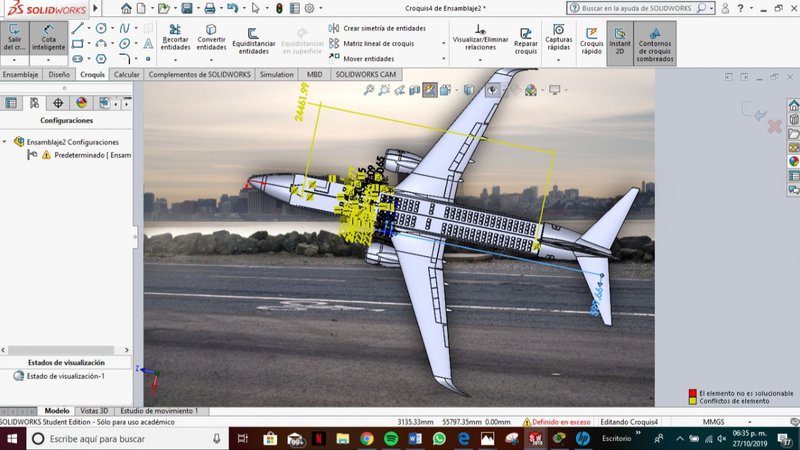
We used piezoelectrics with a protocol ZIGBEE for the reduction of wiring and data transference
Try It Out
Link to GitHub https://github.com/Joseortiz59/HELIOS-FLY-BY-WIRELESS.git
Tags
Link to Youtube https://www.youtube.com/watch?v=svfcSgIa3VI