
Project Details
The Challenge | Internet on the Ocean
BlueNet
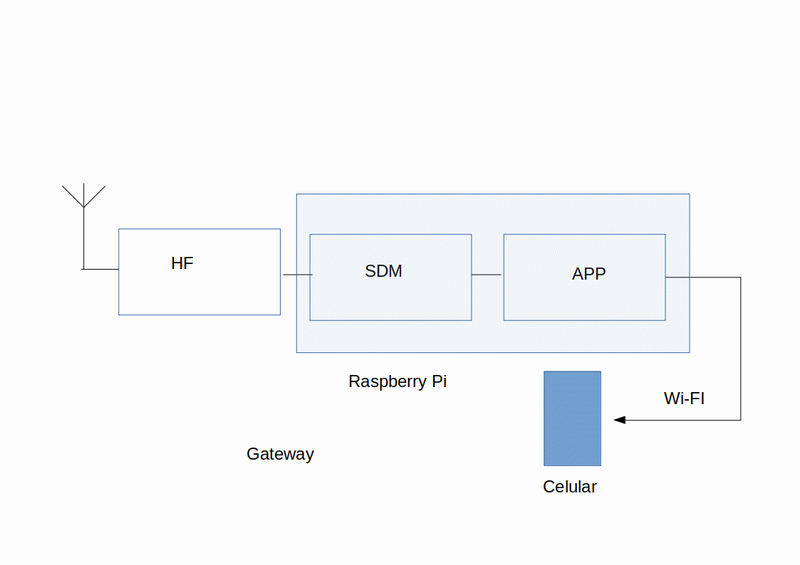
The project consists of the development of a Gateway and a repeater with Digital Communication technology using the High Frequency (HF) band. Our main function is to bring the internet to the most remote places on the planet with a technology already used
BlueNet- The Internet Anywhere
ShortDescription
Thereis a navigational technique called landmarking, widely practiced byfishermen in northeastern of the Brazil to locate fishing grounds indaylight and keeping the coast in sight.
Butfishermen are not always close to the coast and lose their frame ofreference. As they are simple boats, they do not have navigationequipment and time and again they get lost in the Sea, being rescuedby divine providence.
Apopular smart phone with Wi-Fi access and an affordable BlueNetGateway would be enough to help you locate yourself throughinformation from a map site with Smart Phone GPS information.
TheBlueNet System uses technologies from various areas of applicationalready established as Telecommunication and ComputationalProcessing, allowing a lower cost than a Smart Phone in this wayaccessible to all users.
Asthe main utility for using the Internet and the many features that asmart phone has, it enables Maritma navigation safety for small boatsas well as monitoring and control applications in remote areas.
Project Overview
Theproject consists of the development of a Gateway and a repeater withDigital Communication technology using the High Frequency (HF) band.Our main function is to bring the internet to the most remote placeson the planet with a technology already used in other applications.
Oursolution is inspired by the Mesh communication system and using theDTN protocol because communication may not be continuous and thus weguarantee the delivery of data to the end user.
Byestimation a communication can be made directly through thereflection of the waves through the ionosphere or through repeatersthat may be buoys, coastal stations or partner vessels that will bein their normal commercial navigation.
Wewill have the following situations:
- CoastalStation that will be connected to the Internet via cable.
- LargeStation Partner vessels connected to the internet via satellite.
- Floatstation connected to satellite internet.
- CoastalRepeater Station.
- FloatingRepeater Station.
- PartnerVessel Repeater Station
- Gateway
Fora second step, we are studying a Machine learning modeling tocalculate the Maximum Usale Frequency (MUF) function in the stationregion for greater communication performance.
Alongwith this development, the receivers will have the function ofscanning frequency channels for the proper reception of data. Thisfunction will be done through standard head.
Weare also studying data encryption for Critical applications.
CostComparison Between Systems:
Nowadayswe can have internet access on a boat in many ways, but let'sdemonstrate that BlueNet will democratize internet access everywhereon the planet.
Option1: Broadband Global Area Network (BGAN) System
- Terminalcost: $ 1,500 – 2,000
Option2: Satellite dish system
- Terminal+ antenna cost: $ 3,000 - 50,000
Option3: Small, lightweight systems: Iridium Go, IsatHub
- Terminal+ antenna cost: $ 1,500 + $ 3,000 (consumption)
Option4: BlueNet
- Terminal+ antenna cost: $ 500 + $ 100 (subscription)
References:
RFC5050 http:ietf.org
IPNSIGhttp:ipnsig.org
NearReal Time MUF Maphttp:spacew.com