
sat-ELITE| Spot That Fire V2.0
Team Updates
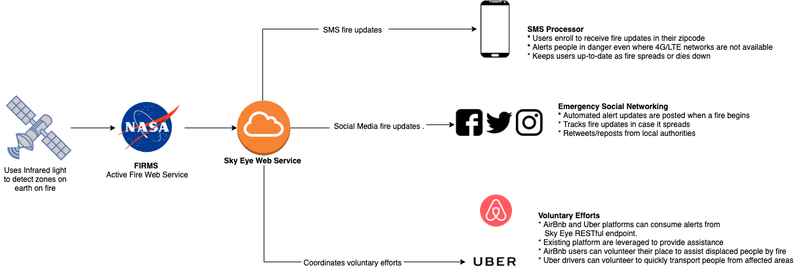
Wirefire Alert System
IF YOU ARE UNDER A WILDFIRE WARNING, GET TO SAFETY RIGHT AWAY
- Leave if told to do so.
- If trapped, call 9-1-1.
- Listen for emergency information and alerts.
- Use N95 masks to keep particles out of the air you breathe.
Prepare NOW
- Sign up for your community’s warning system. The Emergency Alert System (EAS) and National Oceanic and Atmospheric Administration (NOAA) Weather Radio also provide emergency alerts.
- Know your community’s evacuation plans and find several ways to leave the area. Drive the evacuation routes and find shelter locations. Have a plan for pets and livestock.
- Gather emergency supplies, including N95 respirator masks that filter out particles in the air you breathe. Keep in mind each person’s specific needs, including and updated asthma action plan and medication. Don’t forget the needs of pets.
- Designate a room that can be closed off from outside air. Close all doors and windows. Set up a portable air cleaner to keep indoor pollution levels low when smoky conditions exist.
- Keep important documents in a fireproof, safe place. Create password-protected digital copies.
- Use fire-resistant materials to build, renovate, or make repairs.
- Find an outdoor water source with a hose that can reach any area of your property.
- Create a fire-resistant zone that is free of leaves, debris, or flammable materials for at least 30 feet from your home.
- Review insurance coverage to make sure it is enough to replace your property.
- Pay attention to air quality alerts.
National Interagency Coordination Center, https://www.nifc.gov/nicc/
The National Interagency Coordination Center (NICC) is the focal point for coordinating the mobilization of resources for wildland fire and other incidents throughout the United States. Located in Boise, Idaho, the NICC also provides Intelligence and Predictive Services related-products designed to be used by the internal wildland fire community for wildland fire and incident management decision-making.
There are five primary components to the NICC website.
- The Incident Information page is designed to provide the general public with daily updates on large fires throughout the United States.
- The Predictive Services component provides the operational products produced by the NICC and links to outside operational activities.
- The Logistics/Dispatch component provides operational and administrative links to the mobilization sections located in the Center.
- The Administrative component is designed to provide the tools, background information, and links that make Fire and Incident Operations work.
- And, the Related Links components provides Area and National links to other related websites.
National Wildfire Coordinating Group, https://www.nwcg.gov/
The National Wildfire Coordinating Group provides national leadership to enable interoperable wildland fire operations among federal, state, local, tribal, and territorial partners.
Predictive Services
Intelligence, https://www.predictiveservices.nifc.gov/intelligence/intelligence.htm
- Current Large Fire Locations Map
- New Large Fire Locations Map
- Historical Data
- Annual Reports
Weather
Fuels/Fire Danger, https://www.predictiveservices.nifc.gov/fuels_fire-danger/fuels_fire-danger.htm
- Dead fuel moisture
- Normalized Difference Vegetation Index
- North America Fire Danger, https://www.wfas.net/
Outlooks
National Predictive Services
 Gene Nagle