
Akatsuki| Surface-to-Air (Quality) Mission
Project Details
The Challenge | Surface-to-Air (Quality) Mission
Project AIR (Air Intelligence Repository)
Project AIR is an Artificial Intelligence and Machine Learning platform that allows you to easily visualize air quality utilizing both satellite data and supplementary data from reliable sources enabling users to predict, understand, and decide on actions.
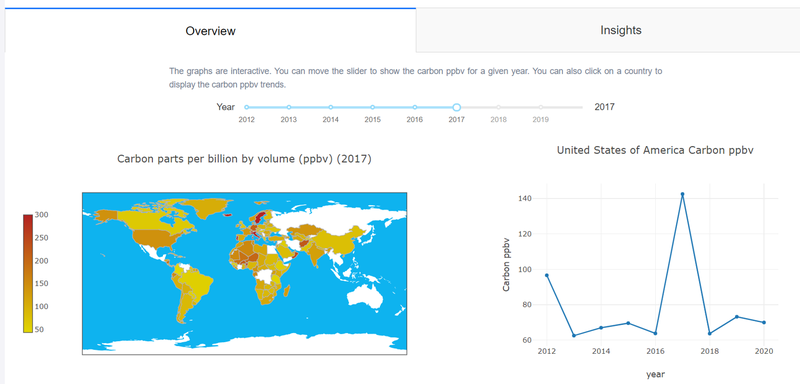
Project Overview
Files and Pitchdeck can be found here:https://drive.google.com/drive/u/1/folders/1fMrA6y...
The platform can be tried here: https://akatsuki-air.herokuapp.com/
The open-source code for the app can be found here: https://github.com/Cyntwikip/AIR
Tags: #ProjectAir #AirKnowIt #MachineLearning #ArtificialIntelligence #AirQuality #Earth #Satellite #Forecast
Problem and Opportunity
Seven million people die pre-mature deaths due to pulmonary and respiratory diseases, lung cancer, and other airborne diseases. This is due to the negative impacts of both outdoor and household air pollution.
Air pollution does not only impact health but also the overall wellbeing and the global economy. In fact, USD 5-trillion are wasted on welfare costs due to air pollution and around USD 225-billion are income that is lost due to poor air quality.
Air Pollution curtails lives, contributes to the climate crisis, and disrupts businesses.
Is it impossible to change? Not really.
The team found a case study by the World Economic Forum in 2018 that China was able to lower its contribution to air pollution by shifting to more renewable sources of energy. This movement led China to slowly decrease its emissions enabling them to go from ranking 1st to 8th in contribution to air pollutions.
But why is it relevant for us to take action?
- Air quality issues are transboundary – aerosols can travel fast and can cross borders, therefore the problem becomes harder to control and risk countries due to the differences in country policies, programs, and evaluation measures.
- Air quality is an indicator of governance and is part of the UN SDGs – countries have pledged to involve themselves in taking actions to achieve the 17 UN SDGs which also focused on air pollution
- Air quality affects a person and its society’s health – one of the leading causes of death every year is air pollution of which 9 out of 10 people breathe polluted air. The cost of mitigating the risk and addressing health problems are greater.
- Air quality affects businesses – air pollution damages forests, bodies of water, crops, and animal populations which are main sources of businesses for many.
But where does NASA fit into all these?
NASAcan help scale the solution by "precise air pollution detection" wherein entities and countries can be convinced by NGO's and other countries to change their operations or practices which causes air pollution.
By using NASA Technology, we can visualize pollutants(solid and liquid particles that go to the air which causes many problems in the environment (climate) and health. It can also be used to identify the entities which are the sources of these pollutants.
For this, our team brings you: PROJECT AIR (Air Intelligence Repository)
Project AIR is an Artificial Intelligence and Machine Learning platform that allows you to easily visualize air quality utilizing both satellite data and supplementary data from reliable sources.
The platform provides governments and private sectors reliable visualization and predictive capacity which allows them to predict, understand, and decide on next steps taking into consideration air quality as a major driver of change.
Our product targets the following users:
- Governments - The government may access the platform to identify which areas have high concentrations of air quality pollutants correlated with areas with high incidences of airborne diseases to generate appropriate programs, solutions, and sanctions (where necessary) to curb the increasing trend of sickness.
- Organizations and companies - Organizations and companies (particularly those with factories and plants) may use the platform to monitor their contributions to air quality pollutants to reduce their footprint as well as to consider technologies that reduce air pollution which could also reduce costs in the long-run
- Individual users - Individual users may also choose to use the platform to keep themselves updated on the current situation of their surrounding environment particularly in areas that are high-risk to airborne diseases.
So what’s next for air quality management? Project AIR.
Currently, we have huge repositories of air quality data which are not maximized by stakeholders to generate data-backed decisions and solutions that can benefit society. However, with Project AIR, governments, organizations, companies, and individuals will be able to predict, understand, and decide on next steps taking into consideration air quality as a major driver of change.
References:
https://www.unenvironment.org/news-and-stories/sto...
https://www.who.int/airpollution/en/
https://www.weforum.org/agenda/2019/03/7-of-the-wo...
https://climatekids.nasa.gov/air-pollution/
https://www.activesustainability.com/environment/t...