
Hostis Lunaris*| Eeny, Meeny, Miney, Sample!
Project Details
Awards & Nominations
Hostis Lunaris* has received the following awards and nominations. Way to go!
The Challenge | Eeny, Meeny, Miney, Sample!
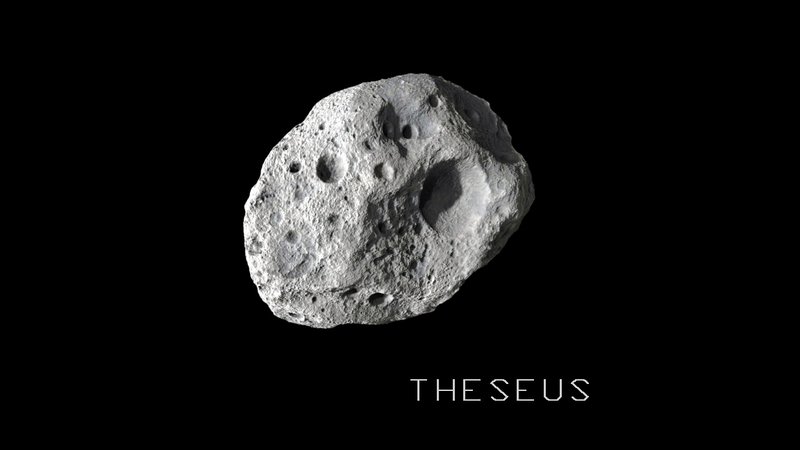
Theseus
The Moon has always been considered a large scientific laboratory, even since the Apollo era. Nowadays, crewed expeditions are gradually giving way to more autonomous systems such as small modular instrument carriers, the future of space exploration.
Introduction
Theseus ( Greek: Θησεύς) was the mythical king and founder of the city of Athens, who established the idea of the Greek word "synoikismos". Etymologically the word means "dwelling together (syn) in the same house (oikos)". The aim of the project “Theseus” is to propose a payload platform capable of performing a variety of scientific tasks, in other words, “dwelling together a plethora of instruments under the same house”. It aims to replace the human presence by autonomously operating and interacting with supporting space systems under the harsh lunar environmental conditions.
Scientific Background and Goals
The first aspect taken into consideration is the hostile environment of the Lunar body:
- Vacuum
- Sunlight (heat & UV)
- Radiation (background plus flares)
- Regolith (take care of moving parts!)
- Levitating charged dust particles at sunset/sunrise
- Day-Night temperature cycles with steep temperature gradients around sunset/sunrise -170°C (midnight) to 130°C (sun at zenith)
- 29.27 to 29.83 days cycle length, i.e. ~350h of darkness and ~350h of sunlight
The Moon has always been considered a large scientific laboratory, even since the Apollo era. Some questions remain open and further investigation is needed in order to fully assess the geological profile of earths’ only natural satellite:
- Crustal thickness of the far side?
- Is there a magma ocean floor at 500km depth?
- Are near- and far-side geologically different?
- What is the cause of shallow moonquakes and deep moonquakes?
- Does the moon have a central core? If yes, what is its size.
- How does the tidal triggering/production of moonquakes work?
- Why is the seismicity level so much lower than predicted from cooling models?
- Do the deep quakes correlate with a partial melt layer?
- Why can‘t we model such a layer at the appropriate depth?

Taking into consideration all the above the Copernicus crater located in Eastern Oceanus Procellarum was chosen as a suitable landing site. The crater is scientifically valuable while permits safe operations and landing due to its large radius and regionally non rocky surface.

Copernicus Crater
Coordinates: 9.62°N 20.08°W
Diameter: 93 Km
Depth: 3.8 Km
Colongitude: 20° at sunrise

Mission Analysis
In order to meet the challenges related to the investigation and observation of the lunar environment, the following architecture is proposed:
- 1 lunar-lander

- 1 lightweight robotic mobile element equipped with a robotic manipulator and 1 mobile robotic scouter


- 6 Theseus modular experiment carriers

While lunar lander and planetary rover technology is widely available and mature, modular carriers are not widely spread among space technologies.
Assumptions
- The lunar lander is capable to transport and safely land all the needed instrumentation
- The lunar lander is autonomous in terms of data handling, power generation and Earth communication
- The lunar lander can be used as a recharging station and/or data hub for all the mission elements
- The mobile elements are able to carry the Theseus modules
- The mobile elements are capable to deploy the Theseus modules on the lunar surface
- Wireless data and energy transfer between the Theseus modules is feasible
This proposal focuses on the Theseus module (TM) thus all requirements formulation refer to it.
TM Requirements Formulation [1]
Scientific Requirements
- SR 01- The system shall be capable of measuring seismic events
- SR 02 - The system shall be capable of performing drilling to a depth of 5 m
- SR 03 - The system shall be capable of performing X-ray fluorescence analysis
- SR 04 - The system shall be capable of performing neutron spectroscopy
Mission Requirements
- MR 01 - The TM shall be stored within the Landers’ payload bay
- MR 02 - The TM shall be deployed by robotic manipulation
System Requirements
- SYR 01 - The TM shall operate autonomously
- SYR 02 - The TM shall survive the lunar environment
- SYR 03 - The TM shall provide suitable interfaces electrical and mechanical to interact with the other mission elements
Design [1]
The proposed design aims to standardise the TM in such way that is compatible with most missions.
All subsystems will be housed in a mechanical structure which shall be optimised towards weight, volume and mechanical interfecability with the other mission elements, rover and lander (MR 01, MR 02). The proposed design resembles a shoe box in size. An estimated weight is between 5 and 10 kg. Carbon nano tubes or similar composite material may be suitable in this regard (SYR 02). In some cases the structure needs to provide accessibility to perform non destructive measurements by the means of a small opening.
Inside the external housing, the basic system components, are an avionics box, an antenna and the scientific payload. The central avionic elements of the TM are grouped within two compartments, referred to as Electronic Box (E-Box) and Power Box (P-Box).
The E-box consists of the following subsystems:
- On board computer (BC) —> SYR 01
- Data handling (OBDH) —> SYR 01
- Communication —> SYR 01
The P-box consists of the following subsystems:
- Electrical power subsystem (EPS) —> SYR 02
- Battery —> SYR 02
Both electronic boxes consists of stackable cubesat like boards. The E-box and P-box provide suitable interfaces for power and data exchange among themselves and the payload as well.
For an optimal communication with mission elements, an antenna needs to be located on-top of theTM, outside the structure.
The TM is equipped with photovoltaics (placed on the body surfaces) to recharge the batteries and extend the unit’s operational life time in order to survive long lunar nights. To optimise the available surface for solar cells, the unit may includes one deployable panel, which almost doubles the top surface area, taking up the biggest share of power generation.
Additionally, inductive transfer of data and energy is possible through an inductive interface mounted on one side of the TM housing. By avoiding mechanical contact, dust mitigation is made obsolete.
The high modularity of the carrier permits a huge variety of payloads thus the capability to exploit different scientific goals. For the scope of this analysis 3 payloads are considered:
- a seismograph (SR 01)
- a self drilling mechanism (SR 02)
- a portable x-ray fluorescent spectrometer (SR 03)
- a portable x-ray neutron spectrometer (SR 04)
Mission Scenario [1]
After a successful landing the mobile elements will be deployed first. Next, using the robotic manipulator will attach to the mechanical interface of the TM carrier in order to detach it from the lander. Placing of the TM by the rovers to suitable locations will follow. From this time on the TM are ready to be operational and begin their scientific activities: seismic measurements, drilling and spectrometry. The rover will continue exploring the crater and perform sample return activities. Energy transfer will take place between the units using the inductive interface in order to accomplish a successful mission. Data will be transmitted from the TM to the lander and from the lander to Earth.
Discussions
Important aspects of a space missions were not taken into account in the aforementioned description. Although the module requirements always depend primarily on the mission target, one can already identify a few aspects which are common in many mission scenarios. We followed the problem formulation in order to define a short qualitative assessments with respect to:
- Structural: Theseus would need tosurvive the loads during launch with extremeaccelerations and dynamic loads (vibrations, acoustic,shocks). Thus, suitable structural decisions have to be made in this direction. Additionally, the absence of gravity shall be taken into account.
- Radiation: For lunar and planetary missions, the most important radiationsources to be considered are cosmic rays, solar energeticparticles and secondary protons / neutrons. Housing components together in E-box or P-box can be beneficial when considering this aspect. Thicker layers can protect multiple units of Theseus resulting in a better shielding and lower mass.
- Temperature: Lunar thermal stress is an important factor in the design. Daytimetemperatures vary between almost 400 K at the equatorto 200 K at the poles and drops to 120 to 5 Krespectively during night-time, while some craters evenshow temperatures of just 26 K, the coldest temperatureknown in our solar system [2]. RTGs are a suitable option to survive lunar nights [3], however Theseus is intended to be "Nuclear Free". Externalradiator plates, internalheaters and heat capacitors to ensure an appropriate mean temperature are already widely used in a variety of space missions.
- Power: Although Thesues will be equipped with solar panels around his body and batteries to ensure power generation and storage, during long lunar nights a hibernation mode may be introduced. During this mode, no or low scientific activity will be conducted in order to keep the module alive.
- Robotic Interaction and Interfaces: A very important aspect of the mission and the module in general is the interaction and interfacability with the other mission components. Theseus needs to be initially stored in a lander and subsequently manipulated by robotic mobile elements. Suitable mechanical and electrical interfaces are needed in this regard.
- Data: Last but not least data exchange between the module, the lander and a ground station must be achieved.
Extended Applicability
Theseus could extend its applicability to asteroid or planetary mining (if considered as a picolander), drawing upon the successfully Mobil Asteroid Surface Scout (MASCOT) [4] experiment, on board of the Hayabusa-2spacecraft, which landed on the asteroid (162173) Ryugu. A parameter of primary importance, when converting kinetic energy into deformation work, is impact velocity which directly depends on the celestial bodys' gravity. Given its small size, Theseus could be equipped with a crushable shell around its body, similar to the airbags concept.
Future work
I order to consider the TM carrier as candidate for future missions a full system analysis must be performed (e.g.: thermal, power, mass etc.) and a breadboard model must be built. Interface, functional and environmental testing of such a mockup shall follow in order to achieve a first TRL.
Conclusions
Impact: Theseus, although was considered in this work as a lunar module, could be adapted to a variety of environments and applications: terrestrial, oceanic and space. Thus, we believe it shall further studied as it could solve a plethora of problems in different scientific fields. Due to its large applicability, Theseus, can inspire a great portion of the scientific and engineering community.
Creativity: Theseus does not exist as we speak now. However, predecessors and close brothers, such as the MASCOT lander, have already proved their applicability to space missions.
Validity: Despite its practical limitations, the TM carrier is a first idea towards having a standardised modular payload carrier. Falling within the philosophy of COTS components may reduce the price of space missions without putting any limitations on the scientific context. Using existing cubesat avionics and standard mechanical interfaces can be adapted to different environments thus be suitable to all future space missions, due to its small size and weight. By enhancing its housing can be valued as a small lander on difficult to land bodies such as asteroids etc..
Relevance: Theseus is an all-in-one solution, a lab on chip like approach. A constellation of Theseus modules on the lunar surface, each equipped with its own unique payload can achieve a large number of scientific goals. It is technically feasible (rapid prototyping could be achieved using COTS) and highly modular: compact size, standardised avionic parts, plug-and-play payload.
References
[1]: https://www.sciencedirect.com/science/article/abs/pii/S0094576518301292
[2]: https://www.sciencedirect.com/science/article/pii/S0019103516304869
[3]: https://www.sciencedirect.com/science/article/abs/pii/S0032063310003065?via%3Dihub
[4]: https://www.sciencedirect.com/science/article/abs/pii/S0094576513000556