
Imagineers| Build a Planet
Project Details
Awards & Nominations
Imagineers has received the following awards and nominations. Way to go!
The Challenge | Build a Planet
Planet Story
Planet Story is an immersive educational voice game that helps players learn about optimal conditions required for habitable planets, through the experimental experience of creating their own planetary systems.
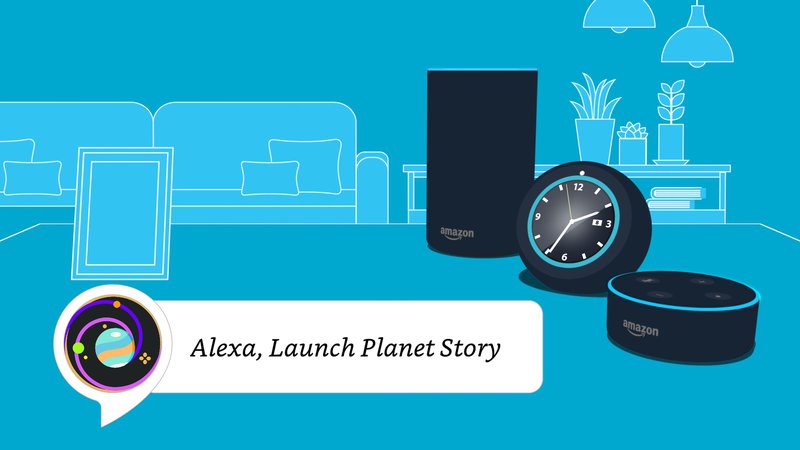
Planet Story
Planet Story is an immersive educational voice game that helps players learn about optimal conditions required for habitable planets, through the experimental experience of creating their own planetary systems. We utilised NASA data and resources to create the game logic and educational facts to ensure the gaming experience is as close to science as possible. We hope to inspire more people, both young and old to develop an appreciation for the tremendous possibilities of our incredible universe, discover the amazing findings and contributions that NASA has given to humanity, and inspire people to learn more about NASA’s missions and projects, such as the Kepler project discovering new exoplanets around the universe.
Video Link
YouTube - https://youtu.be/YAzDIHB8tPM
Vimeo - https://vimeo.com/367683509
WEBSITE: https://planetstory.co
Additional Files:
http://bit.ly/planetstory-additional-2019
Background
We wanted to make a game which can help educate players on some of the requirements needed to have a habitable planet and what are the optimal conditions for life to thrive. The player should realise that Earth is a very unique and precious planet and show more appreciation for what we have, and that habitable planets are hard to find.
The purpose of this project is to educate the players about the stars and the planets that are contained within the solar system. Our team was inspired to choose this challenge because we thought that through this challenge we can create a game which will be a fun and creative way to educate players about the planets and the stars in the solar system with through a voice controlled experience.
About Us
Our multi-national team is made up of global citizens, based in New Zealand and Hawaii, USA. Consisting of astronomy enthusiasts, researchers, technologists, designers, data scientists, marketer, product manager, business professionals, with close connections to academia and industry. our multi-national team is passionate about bringing stories of our universe to life. We have combined over a decades of experience across software development, with 5 Alexa Master Skill Builders who have been through Amazon's first cohort of the programme in Australasia.
Why Voice Game?
Voice games are the future. As digital & home assistants become more widespread and integrated into our daily routine, we are seeing a new experiences open up to people, young and old, that provide a fresh, engaging and immersive approach to gaming and learning. (Reference: https://developer.amazon.com/blogs/alexa/post/d015fcc0-d6c3-40d9-bd1a-f3d2a2508a7a/why-voice-games-are-part-of-the-future-of-gaming).
Voice is one of the fastest growing mediums.
There has been a huge spike in popularity of Alexa and Google Home all over the world.
In December 2016 we saw Amazon’s Echo products become most popular during holidays. Google assistant is now available on 400 million+ devices which include products like Google Home, Android phones, and tablets, iPhones, headphones, TVs, watches and more. Comscore predicts that “50% of all searches will be voice searches by 2020”. According to Alpine.AI more than one billion searches were made by voice. “37% use Siri, 23% use Microsoft’s Cortana AI, and 19% use Amazon’s Alexa AI at least monthly.” — Hubspot
(Reference: https://medium.muz.li/designing-for-voice-a84aeeed6425)
This is not the only reason. We want to ensure our game is accessible to everyone.. Including people with vision impairment, who would otherwise never have the chance to experience the beauty of the universe. Games are traditionally not developed to cater for these audiences - however, the voice experience allows us to transcend sight and visual impairment. We are committed to empower those who are blind or partially sighted to experience the wonders of space, by utilising our experience in human centered design, audio, and emerging technology to create inclusive gaming experience for both vision-enabled and vision impaired audiences.
According to the WHO (https://www.who.int/blindness/GLOBALDATAFINALforweb.pdf). The esmated number of people visually impaired in the world is 285 million, 39 million blind and 246 million having low vision; 65 % of people visually impaired and 82% of all blind are 50 years and older. Our game will help us transcend the barriers and make knowledge of NASA available to more people.
Problem Statement
There are a limited number of Voice User Interface (VUI) applications created to educate users about the planetary system. Because Voice User Interface (VUI) is the trending technology movement from the web to mobile and currently to this date of evolving tech voice user interface is the niche that will progress getting better. In addition to ‘inclusive design’, accessibility is also considered for the visually impaired and those users are able to experience the interface equally as the majority of non-disabled users. Voice User Interface (VUI) is instantaneous and the younger generation would therefore become more accustomed to learning using such tools. Therefore, there is a need for a modern educational platform which can enable the younger generation to learn more about the planetary system and the specific conditions required for a habitable planet.
Our team also believes that if people are more aware of the unique position that Earth happens to be in, our communities would be more compassionate towards looking after our planet.
Solution
Gamification has been proven from primary research of user testing voice games to be a useful tool for educational purposes. As a result, a personalised educational space universe voice game for Amazon Alexa was built to help address the problem statement for the build-a-planet challenge.
What it does
Our team has created a game which allows the players to decide the properties of the planets and the stars. While the player customize their planets and stars, Information about the customisable properties will be given to the player, therefore educating the player about the decision they have made.
There are a limited number of VUI applications created to educate users about the planetary system. Because VUI is a trending technology, the younger generation would therefore become more accustomed to learning using such tools. Therefore, there is a need for a modern educational platform which can enable the younger generation to learn more about the planetary system and the specific conditions required for a habitable planet.
Our team also believes that if people are more aware of the unique position that Earth happens to be in, our communities would be more compassionate towards looking after our planet.
Gamification has been proven to be a useful tool for educational purposes. As a result, a game for Amazon Alexa was built to help address the problem statement above.
Our team has created a game which allows the players to decide the properties of the planets and the stars. While the player customize their planets and stars, Information about the customisable properties will be given to the player, therefore educating the player about the decision they have made
The game features fun graphics to make the game more engaging for the younger audience. As the player becomes more accustomed to the results of different planetary phenomena (e.g. solar temperature, mass, planet size, age, etc.), they may begin to understand the necessary conditions required to construct a habitable planet with the use of voice. Our team has used NASA research data to derive the game logic.
NASA Resources
To ensure that the mechanics of our game are accurate and reflect science, our team spent a lot of time throughout the weekend to conduct extensive research on planetary systems with habitable conditions, exoplanets, star formation, planet formation, and more data, to distill facts and insights from a wide range of data sources. After gathering the resources, we spent a considerable amount of time verifying the facts to ensure it is backed up by reputable sources. The information gathered allowed us to create complex game logic, which was utlised for ensuring that results and outcomes of the game were true to science, thus allowing the educational facts be weave seamlessly in game.
Example of game logic matrix derived from facts gathered from extensive research:
https://drive.google.com/open?id=1TuwL0GhrT7nLLcU_a6ihQ6X57u9J6fAQ
Note that in order to simplify the game for voice and to ensure we are able to create a full working publish-ready game within 48 hours, some logic relating to planet customisation were simplified. We will however explore more customisation features in the future and add more advanced options in upcoming versions of the game.
We made use of the following NASA resources:
https://exoplanets.nasa.gov/eyes-on-exoplanets/
https://github.com/nasa/NASA-3D-Resources
https://worldview.earthdata.nasa.gov/
https://nasa3d.arc.nasa.gov/search/planets/
https://solarsystem.nasa.gov/planets/overview/
https://exoplanets.nasa.gov/interactable/1/index.html
https://www.starchitect.net/game/
https://earthobservatory.nasa.gov/features/RemoteSensing/remote_04.php
https://settlement.arc.nasa.gov/Basics/wwwwh.html
https://exoplanets.nasa.gov/interactives/
https://solarsystem.nasa.gov/planets/overview/
https://www.jpl.nasa.gov/edu/learn/video/space-place-in-a-snap-the-solar-systems-formation/
https://www.jpl.nasa.gov/edu/teach/activity/modeling-the-structure-of-the-solar-system/
https://solarsystem.nasa.gov/planets/overview/
https://www.jpl.nasa.gov/edu/teach/activity/space-...
https://exoplanets.nasa.gov/faq/15/what-is-the-habitable-zone-or-goldilocks-zone/
https://exoplanets.nasa.gov/alien-worlds/historic-timeline/
https://exoplanets.nasa.gov/alien-worlds/kepler-ti...
https://exoplanets.nasa.gov/alien-worlds/ways-to-find-a-planet
https://exoplanets.nasa.gov/alien-worlds/strange-new-worlds
https://exoplanets.nasa.gov/alien-worlds/exoplanet-travel-bureau/
https://exoplanets.nasa.gov/what-is-an-exoplanet/how-do-we-find-habitable-planets/
https://www.nasa.gov/feature/jpl/rocky-habitable-sizing-up-a-galaxy-of-planets
https://exoplanets.nasa.gov/resources/79/nasas-kepler-announces-11-new-planetary-systems/
https://solarsystem.nasa.gov/solar-system/our-solar-system/overview/
https://spaceplace.nasa.gov/other-solar-systems/en/
https://spaceplace.nasa.gov/exoplanet-snap/en/
https://exoplanets.nasa.gov/faq/5/is-there-life-on-other-planets/
https://exoplanets.nasa.gov/reference/faq/
https://science.nasa.gov/science-news/science-at-nasa/2003/02oct_goldilocks/
https://www.nasa.gov/mission_pages/kepler/overview/index.html
https://exoplanetarchive.ipac.caltech.edu/docs/data.html
https://exoplanetarchive.ipac.caltech.edu/index.html
PLEASE SCROLL TO THE BOTTOM FOR A FULL LIST OF OTHER RESOURCES USED.
Space Apps Offers
We made use of the free.co domain name for building our project website - we found the experience very simple and straightforward. We love the experience of domain hosting provided by Porkbun and will continue to utilise the domain and site builder after NASA Space Apps to grow our online presence and help us market our game.
Future Plans
Planet Story will continue onwards being developed further with more stories, information, research of our planets and worlds after the NASA Space Apps 2019 competition. We have already submitted the game to the Amazon Alexa store (pending review) and the game will be publicly available to enable and experience before the end of Oct 2019. We will continue to test, develop and improve the game experience with:
- Events of asteroids, comets, volcanic eruptions, earthquakes, and black holes.
- Ability to create more planets, or add multiple suns in the planetary system.
- Create a website which allows the player to view and share the planetary system they have created.
- Randomiser / Random name generator or personalised sun/planet naming
- Factual up-to-date data from NASA to display on the Alexa Echo Show devices and mobile devices with Alexa
- In-Skill Purchasing incentives to purchase for the player’s solar system
- Unlock something fun (collection
- Galaxy Map system for our player base to travel to another player’s planets, leaderboard for most inhabitable/least inhabitable
- Challenges built with certain correlations.
- Missions eg. make maps habitable
- Tutorial stage to teach player before they start the sandbox path.
Our project roadmap is as follows:
- PHASE 1 - Initial Release and Public Beta at NASA Space Apps 2019 - Features built and fully working game tested and published to Alexa store. Voice integration completed.
- PHASE 2 - Additional Features - Build more planets, binary star system, more facts, more graphics, website to view and share the planetary you’ve built. Integrate background music to create ambience. Improve Alexa performance. Conduct user testing and research to identify and prioritise features. Research pricing model for premium features.
- PHASE 3 - Marketing and Growth - Promotion through social media, partnering with schools for demos and giveaways, partnering with universities and institutes to improve knowledge base and game logic. We will aim to raise $5000 to scale the development of the game through a Crowdfunding campaign.
For more updates on our product roadmap and exciting future features in the pipeline, please visit our website https://planetstory.co - we will be posting updates regularly. Enter your email address to signup for updates, be the first to hear when our app lands on the Alexa Store and get exclusive invitations to our upcoming public betas.
Built With
Insert the hardware and software tools you used here. For example, what coding languages did you use? What hardware did you use (cell phones, Arduino, Raspberry Pi, etc.)?
Technical Overview:
Planet Story is a game built for Amazon Alexa, utilising AWS Cloud Cognitive Services for Natural Language Processing and Speech-To-Text recognition. We used Python to code the backend which is run on AWS Lambda. We started building in Alexa Skill Builder portal and define the interaction models, intent schema and created the framework to determine the behaviour of our skill.
The display of the planetary system is done using APL (Alexa Presentation Language). We made use of audio capabilities to enrich the user experience by creating our own narrations. We also utilised high quality Amazon Alexa Polly voices for dialogues by using Text-To-Speech.
We designed the user flow and developed a storyline for the game based on the results of our NASA data & external data research. We wrote out all the utterances to define the intent schema, and added logic for different choices in the game.
We utilised Github as our code repository and adhered to CI/CD principles to setup our development environment for continuous development, integration and testing.
We utilised the Amazon Alexa Developer Console and Alexa-enabled devices for testing. The app successfully passed certification and has been submitted to the English (US) Alexa Store for publishing (pending review by Amazon).
In the future we will be considering porting the app to Google Home to reach more space enthusiasts around the world.
System Architecture Diagram:
https://drive.google.com/open?id=1XPdlCRlngclxiwwKB5TRt7SSgxj7D-3S
Design Overview:
Using Adobe Illustrator and Adobe Photoshop to recreate personalised vector images that were sized to the specific pixel requirements on the Alexa Developer Console.
Audio files were meticulously captured with a voice recorder in a soundproof studio and carefully edited on Adobe Audition to be exported into the required audio file format and be hosted on AWS S3.
The demonstration in the showcase video is successful with the use of the Alexa Developer Console to simulate an Alexa Echo Show device with a display of the Space Story skill graphics.
The 30 seconds of glory video was edited on Adobe Premiere Pro and Adobe After Effects. Space planets, galaxy and universe footage were from NASA’s open resources on Flickr and Github. Other footage were also from Adobe Stock and YouTube. User testing demonstration of the Planet Story skill on the Alexa Developer Console was captured with a Canon 800d camera and Zoom H1n recorder. ‘The City of Hope’ by Borrtex music track was retrieved from the royalty free music website called Artlist.
Try it out
Where can we find your submission to try ourselves? Post a link to your public code repository (e.g., GitHub) or a link to an app store (e.g., iTunes, Google Play). You can also provide a demo of you showcasing the project in the form of a video link.
Website: https://planetstory.co
Demo video: https://drive.google.com/open?id=1YMHPvq2Si8_FF2HxNuz8NnRcXtPVrBis
Github: https://github.com/tristankells/build-a-planet
Link to play game: Pending Amazon Alexa team review. We will upload the link to our website once it’s ready.
How to play:
On your Alexa device:
- Enable the Skill by saying “Alexa, enable Planet Story”
- Start playing by saying “Alexa, play Planet Story”!
On your mobile device:
- Depending on if you have an Android or iOS device, please download the Alexa app from:
- Enable the Skill by
- Saying “Alexa, enable Planet Story”
- Navigate to Skill & Games under menu, click the search icon, type “Planet Story”. On the Skill page, click “Enable to use”
- Start playing by saying “Alexa, play Planet Story”!
Tags
#alexa, #amazon, #aws, #voice, #game, #voicegame, #earth, #sun, #solar, #solarsystem, #planet, #planets, #exoplanet, #exoplanets, #planetarysystem, #habitable, #goldilockzone, #python, #gamification, #education, #fun, #nasa, #astronomy, #star, #alexamasterskillbuilder, #nasaspaceapps, #AlexaSkills, #AlexaSkill, #VoiceDesign, #VUI, #SmartHome, #Alexadev, #AmazonEcho, #IoT, #Learning, #Educational, #Memory, #English, #Gamification, #Design, #Listening, #International, #AmazonAlexa, #nasaspaceapps, #nasaspaceappsNZ, #hawaii, #newzealand, #planetarysystem, #life, #habitable, #goldilockzone, #javascript, #computervision, #machinelearning, #ML, #STEM, STEAMD, #AI, #artificialintelligence, #javascript, #ruby, #python, #react, #earthscience, #moon, #satellite, #radio, #flight, #solar system, #adobecreativecloud, #adobeCC, #premierepro, #aftereffects, #photoshop, #illustrator, #animation, #interactive, #Cognitive, #creative, #story, #build, #create, #learn, #discover, #APAC, #pacific
Other Resources (continued from NASA Resources section)
We made use of the following NASA resources:
https://exoplanets.nasa.gov/eyes-on-exoplanets/
https://github.com/nasa/NASA-3D-Resources
https://worldview.earthdata.nasa.gov/
https://nasa3d.arc.nasa.gov/search/planets/
https://solarsystem.nasa.gov/planets/overview/
https://exoplanets.nasa.gov/interactable/1/index.html
https://www.starchitect.net/game/
https://earthobservatory.nasa.gov/features/RemoteSensing/remote_04.php
https://settlement.arc.nasa.gov/Basics/wwwwh.html
https://exoplanets.nasa.gov/interactives/
https://solarsystem.nasa.gov/planets/overview/
https://www.jpl.nasa.gov/edu/learn/video/space-place-in-a-snap-the-solar-systems-formation/
https://www.jpl.nasa.gov/edu/teach/activity/modeling-the-structure-of-the-solar-system/
https://solarsystem.nasa.gov/planets/overview/
https://www.jpl.nasa.gov/edu/teach/activity/space-...
https://exoplanets.nasa.gov/faq/15/what-is-the-habitable-zone-or-goldilocks-zone/
https://exoplanets.nasa.gov/alien-worlds/historic-timeline/
https://exoplanets.nasa.gov/alien-worlds/kepler-ti...
https://exoplanets.nasa.gov/alien-worlds/ways-to-find-a-planet
https://exoplanets.nasa.gov/alien-worlds/strange-new-worlds
https://exoplanets.nasa.gov/alien-worlds/exoplanet-travel-bureau/
https://exoplanets.nasa.gov/what-is-an-exoplanet/how-do-we-find-habitable-planets/
https://www.nasa.gov/feature/jpl/rocky-habitable-sizing-up-a-galaxy-of-planets
https://exoplanets.nasa.gov/resources/79/nasas-kepler-announces-11-new-planetary-systems/
https://solarsystem.nasa.gov/solar-system/our-solar-system/overview/
https://spaceplace.nasa.gov/other-solar-systems/en/
https://spaceplace.nasa.gov/exoplanet-snap/en/
https://exoplanets.nasa.gov/faq/5/is-there-life-on-other-planets/
https://exoplanets.nasa.gov/reference/faq/
https://science.nasa.gov/science-news/science-at-nasa/2003/02oct_goldilocks/
https://www.nasa.gov/mission_pages/kepler/overview/index.html
https://exoplanetarchive.ipac.caltech.edu/docs/data.html
https://exoplanetarchive.ipac.caltech.edu/index.html
Amazon resources:
https://github.com/alexa-labs/skill-sample-nodejs-space-explorer/blob/master/docs/atmosphere_view.md
https://github.com/alexa-labs/skill-sample-nodejs-space-explorer/blob/master/docs/distance_view.md
https://github.com/alexa-labs/skill-sample-nodejs-space-explorer/blob/master/docs/size_view.md
Additional resources used include the following:
https://en.wikipedia.org/wiki/Circumstellar_habitable_zone
https://answersingenesis.org/astronomy/stars/blue-stars/
https://upload.wikimedia.org/wikipedia/commons/1/17/Hertzsprung-Russel_StarData.png

https://www.space.com/21640-star-luminosity-and-magnitude.html
https://science.nasa.gov/planetary-data-system

https://en.wikipedia.org/wiki/Biosphere
http://lasp.colorado.edu/home/maven/files/2018/04/Brain_MAVEN_Webinar.pdf
https://www.scienceabc.com/nature/what-makes-a-planet-habitable.html
https://en.wikipedia.org/wiki/Yellow_giant
https://en.wikipedia.org/wiki/Yellow_supergiant_star
https://www.space.com/32888-dying-stars-make-habitable-exoplanets.html
https://www.centauri-dreams.org/2008/12/15/habitability-around-red-giants/
https://earthsky.org/space/k-stars-goldilocks-stars-ideal-for-habitable-planets
http://www.solstation.com/habitable.htm#sthash.yZ1RcXqz.dpbs
https://en.wikipedia.org/wiki/Habitability_of_red_dwarf_systems
https://en.wikipedia.org/wiki/Habitability_of_K-type_main-sequence_star_systems
https://en.wikipedia.org/wiki/Earliest_known_life_forms
https://worldbuilding.stackexchange.com/questions/129356/habitable-zone-around-a-blue-supergiant
https://worldbuilding.stackexchange.com/questions/...
https://worldbuilding.stackexchange.com/questions/134977/planet-orbiting-a-red-dwarf?rq=1
https://worldbuilding.stackexchange.com/questions/134977/planet-orbiting-a-red-dwarf?rq=1\
https://www.quora.com/Can-a-blue-super-giant-have-a-goldilocks-zone
https://astronomy.stackexchange.com/questions/20610/do-blue-giants-have-a-habitable-zone
https://arxiv.org/ftp/astro-ph/papers/0312/0312522.pdf
https://www.liebertpub.com/doi/abs/10.1089/ast.2012.0938?journalCode=ast
https://www.britannica.com/science/stellar-classification
https://www.enchantedlearning.com/subjects/astronomy/stars/startypes.shtml
http://scienceline.ucsb.edu/getkey.php?key=3919
https://en.wikibooks.org/wiki/General_Astronomy/Temperature
https://en.wikipedia.org/wiki/Aldebaran
https://en.wikipedia.org/wiki/VY_Canis_Majoris
https://en.wikipedia.org/wiki/Rigel
https://en.wikipedia.org/wiki/Spica
https://en.wikipedia.org/wiki/Betelgeuse
https://en.wikipedia.org/wiki/Star
https://www.iflscience.com/space/finding-star-call-home/
http://members.fcac.org/~sol/solcom/habitable.htm#sthash.a4KLgx0C.dpbs
https://www.space.com/23772-red-dwarf-stars.html
https://www.universetoday.com/83248/plausibility-check-habitable-planet-around-red-giants/
https://www.sciencedaily.com/releases/2019/03/190307161924.htm
https://www.msnucleus.org/membership/html/k-6/uc/solar_system/5/ucss5_3a.html
https://www.newscientist.com/article/dn17084-orange-stars-are-just-right-for-life/
http://phillips.seti.org/kids/habitable-zones.html
https://www.earthmagazine.org/article/super-earths-mirrors-our-world
https://www.quora.com/What-is-the-largest-class-of-stars-that-could-support-a-habitable-zone
https://www.quora.com/Could-an-O-type-star-have-a-habitable-zone
http://adsabs.harvard.edu/full/1960PASP...72..489H
https://www.e-education.psu.edu/astro801/content/l12_p4.html
https://en.wikipedia.org/wiki/Planetary_habitability
https://en.wikipedia.org/wiki/Superhabitable_planet
https://www.universetoday.com/143731/planet-sizes-matter-for-habitability-too/

https://cronodon.com/SpaceTech/Main_Sequence.html
http://stars.astro.illinois.edu/sow/class.html
http://www.star.ucl.ac.uk/~pac/spectral_classification.html
http://www.atlasoftheuniverse.com/startype.html
http://hyperphysics.phy-astr.gsu.edu/hbase/Starlog/staspe.html
https://www.space.com/57-stars-formation-classification-and-constellations.html
https://en.wikipedia.org/wiki/Red_supergiant_star
http://news.cornell.edu/sites/chronicle.cornell/files/SUN_Habitable_Zones460.jpg?itok=iXj3KqJj

https://www.universetoday.com/128979/friendly-giants-cozy-habitable-zones/
https://www.space.com/22471-red-giant-stars.html
https://www.space.com/17733-earth-sun-distance-astronomical-unit.html
https://newatlas.com/red-giant-life-discovery/43406/
https://www.livescience.com/venus-oceans-habitable.html
https://blogs.scientificamerican.com/observations/no-the-exoplanet-k2-18b-is-not-habitable/
https://www.smithsonianmag.com/smart-news/venus-could-have-been-habitable-billions-years-180973203/
https://www.ncbi.nlm.nih.gov/pmc/articles/PMC3982426/
https://learn.genetics.utah.edu/content/astrobiology/conditions/
https://www.scienceabc.com/nature/what-makes-a-planet-habitable.html
https://www.lpi.usra.edu/education/explore/our_place/hab_ref_table.pdf
http://ircamera.as.arizona.edu/NatSci102/NatSci102/lectures/habzone.htm
https://en.wikipedia.org/wiki/List_of_potentially_habitable_exoplanets
https://www.britannica.com/science/habitable-zone
https://phys.org/news/2012-03-moons-gas-giants-affect-habitable.html
https://en.wikipedia.org/wiki/Habitability_of_natural_satellites
https://www.npr.org/2011/11/18/142512088/is-a-moon-necessary-for-a-planet-to-support-life
https://en.wikipedia.org/wiki/Rare_Earth_hypothesis
https://www.space.com/12574-moonless-earth-life-habitable-alien-planets.html
http://www.astronomynotes.com/solarsys/s3.htm
https://www.psi.edu/epo/faq/atmosphere.html
https://solarsystem.nasa.gov/news/436/10-things-planetary-atmospheres/
https://en.wikipedia.org/wiki/Extraterrestrial_atmosphere
https://www.britannica.com/science/atmosphere/The-atmospheres-of-other-planets
http://abyss.uoregon.edu/~js/ast121/lectures/lec14.html
https://www.sciencefocus.com/space/can-a-planets-atmosphere-get-bigger-over-time/
http://theconversation.com/what-makes-one-earth-like-planet-more-habitable-than-another-33479
https://www.space.com/54-earth-history-composition-and-atmosphere.html
https://www.space.com/18644-mercury-atmosphere.html
https://www.space.com/17028-terrestrial-planets.html
https://www.quora.com/Why-do-some-planets-have-an-atmosphere-while-others-dont
https://www.sciencedaily.com/releases/2013/10/131009153455.htm
https://spaceplace.nasa.gov/lone-planet/en/
https://science.howstuffworks.com/planet-exist-without-host-star.htm
https://en.wikipedia.org/wiki/Rogue_planet
https://en.wikipedia.org/wiki/Exomoon
https://en.wikipedia.org/wiki/Planetary_system
https://en.wikipedia.org/wiki/Solar_System
http://planetary-science.org/planetary-science-3/planetary-astronomy/
https://www.infoplease.com/encyclopedia/science/space/astronomy/planetary-system
https://www.sciencedirect.com/topics/earth-and-planetary-sciences/planetary-system
https://astrobites.org/2019/07/29/an-interplanetary-collision-in-a-distant-planetary-system/